About the collection
The collection covers the period of the 20th to the beginning of the 21st century. and has about 5,000 works.

Wed ‒ Sun: 10:00 ‒ 18:00
Mon-Tues: Closed
About the collection
The collection covers the period of the 20th to the beginning of the 21st century. and has about 5,000 works.
The National Museum of Decorative Arts of Ukraine holds inexhaustible treasures of folk art, among which a special place is occupied by the collection of decorative painting. It covers the period of the twentieth and early twenty-first centuries and includes about 5000 works.
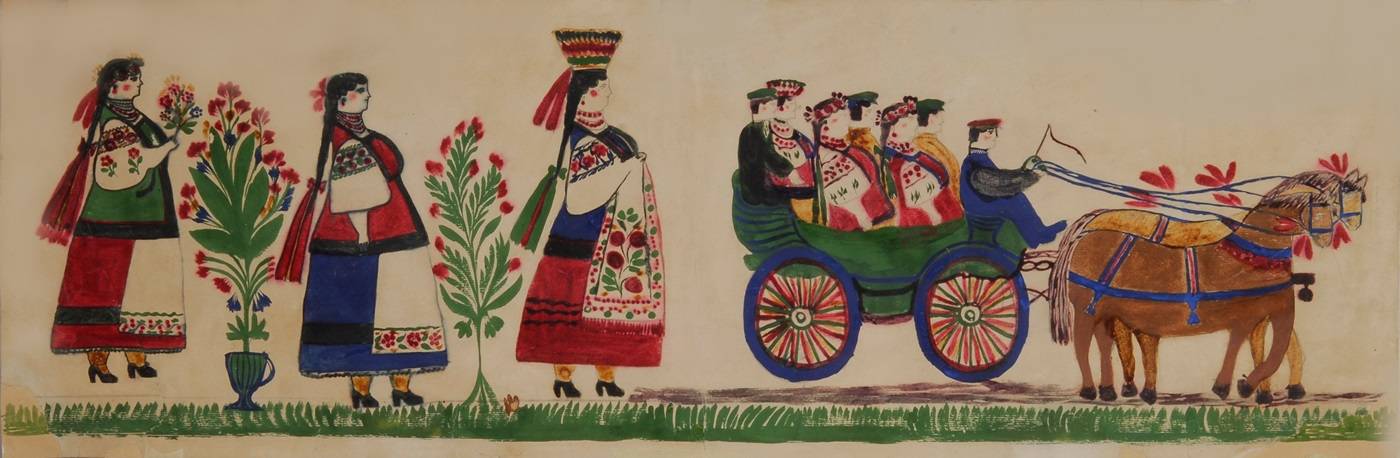
Decorative painting originated as an art of painted houses and outbuildings, paintings of round wooden sculptures, furniture, including chests and household items. Over the centuries, regional peculiarities of decorative painting were developed with their own figurative style, composition, color scheme, and technique, which influenced both the nature of ornamental motifs and the painting style in general.
Ornamentation and the range of subjects of folk paintings were constantly changing under the influence of historical events and artistic styles characteristic of different periods of cultural life in Ukraine, which enriched the works with new features, fresh plastic and coloristic solutions. In the twentieth century, ornaments began to lose their symbolic meaning and serve mainly for decoration, turning into a purely aesthetic phenomenon.
The study and collection of wall paintings began in the early twentieth century. Scholars and researchers of folk art traveled to different regions of Ukraine on expeditions, and the sketches of traditional murals they collected became the basis of the museum collection.
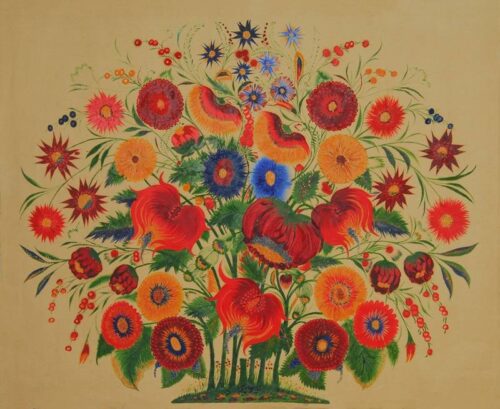
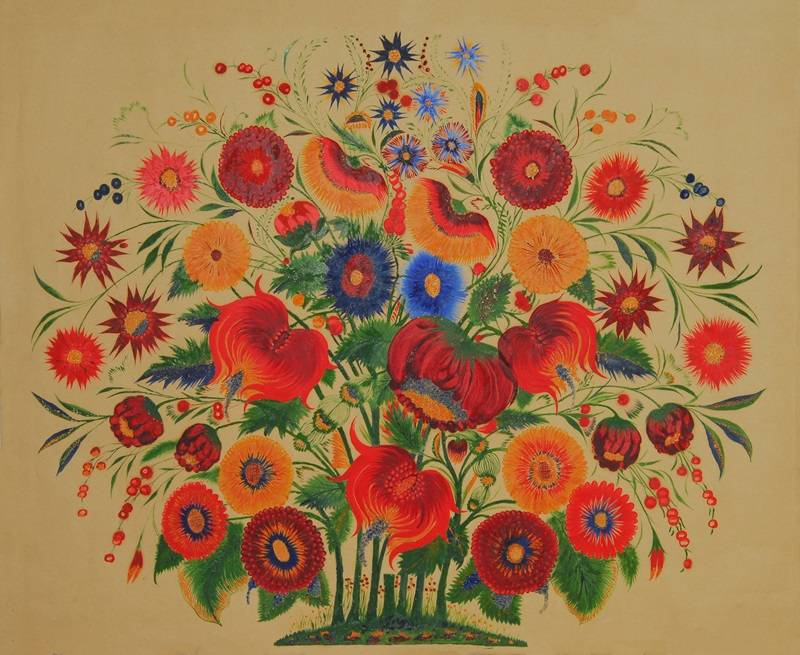
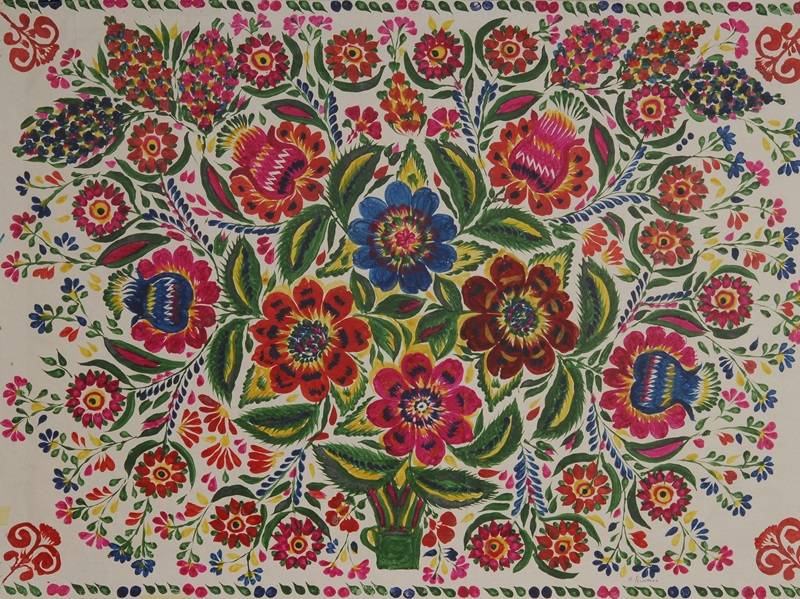
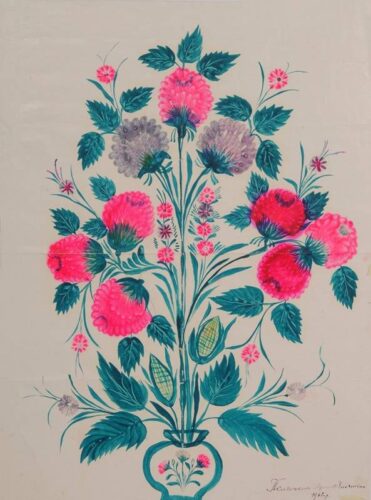
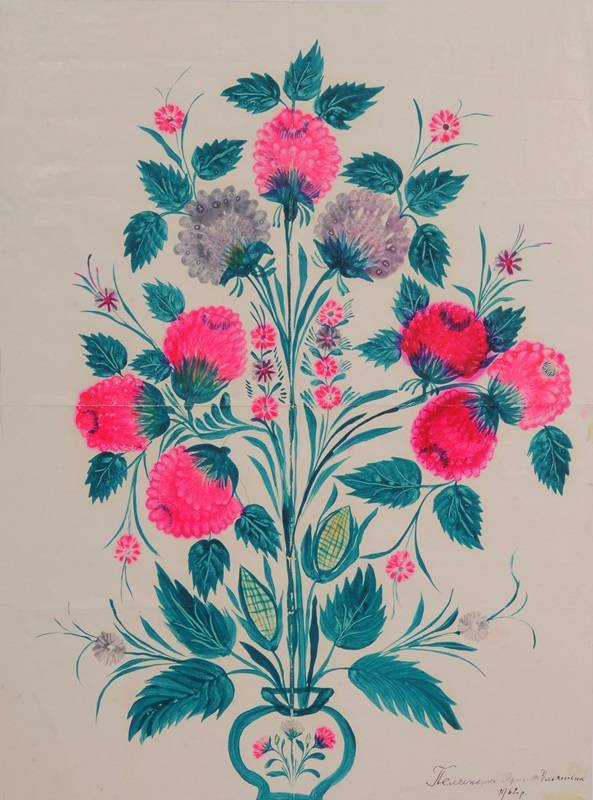
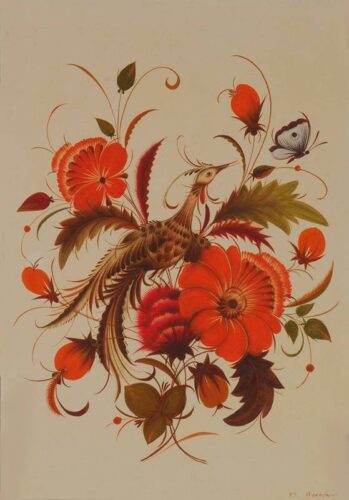
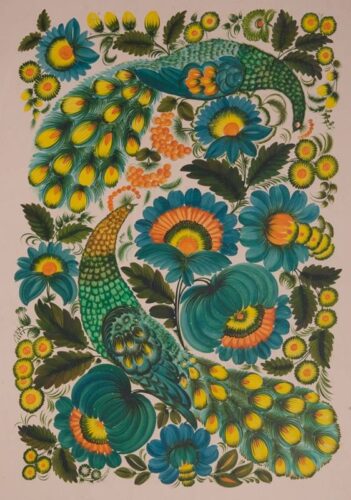
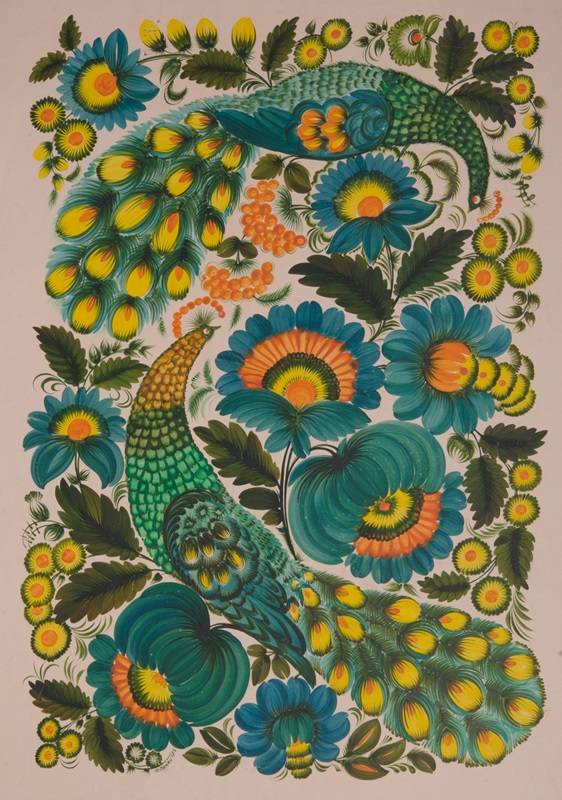
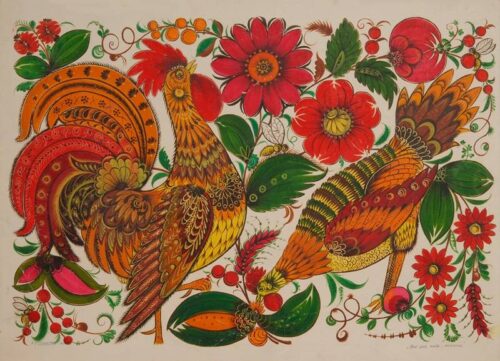
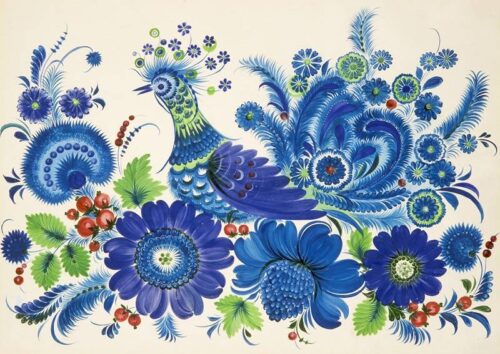
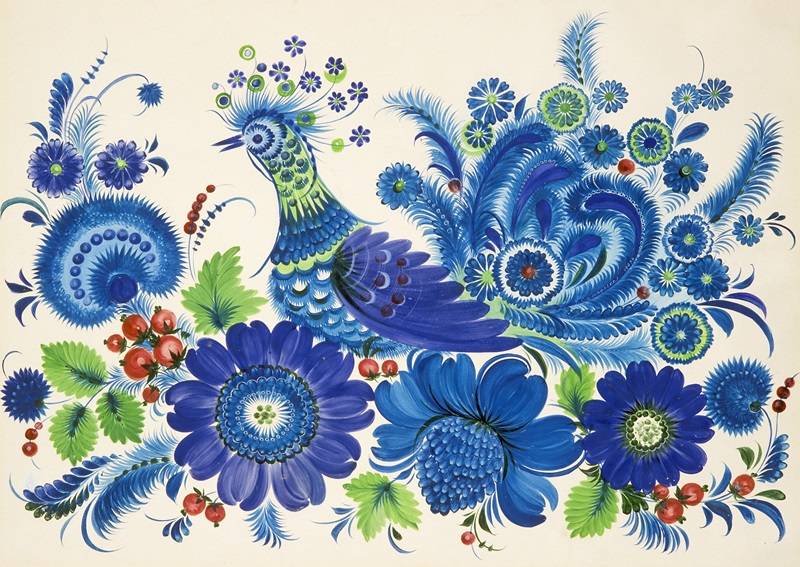
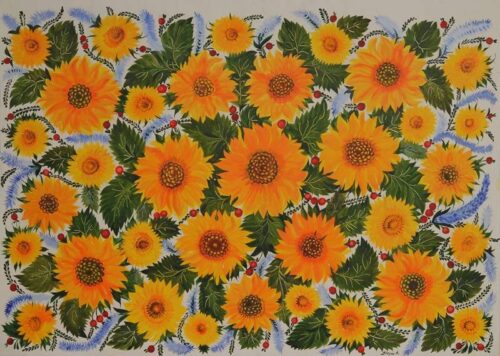
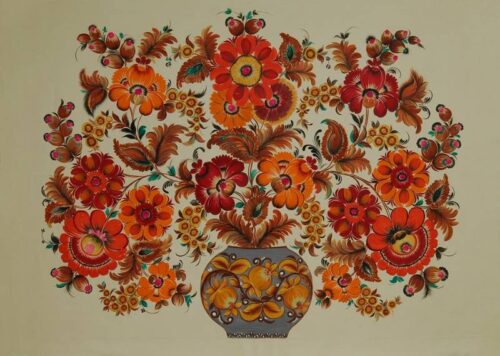
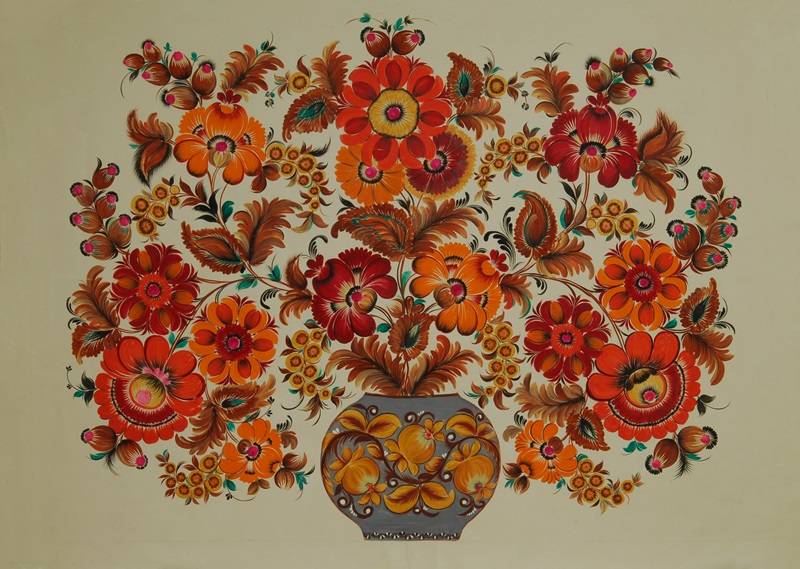
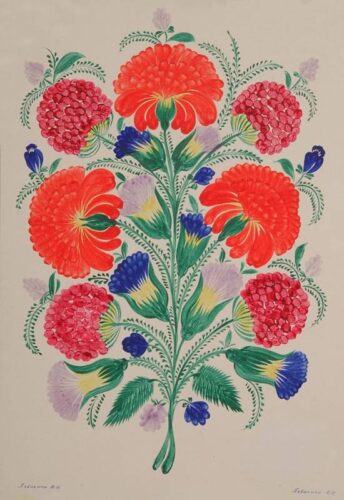
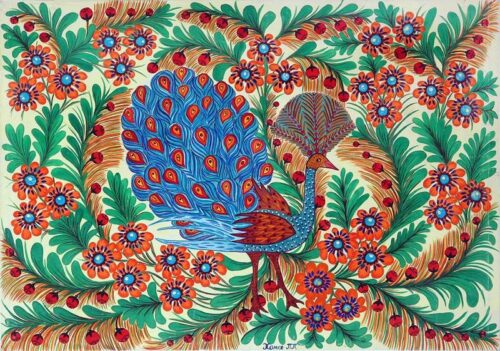
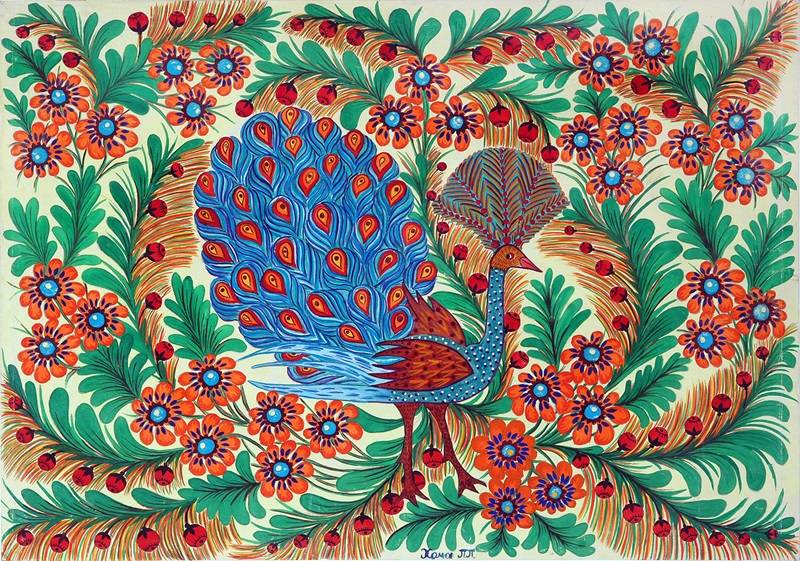
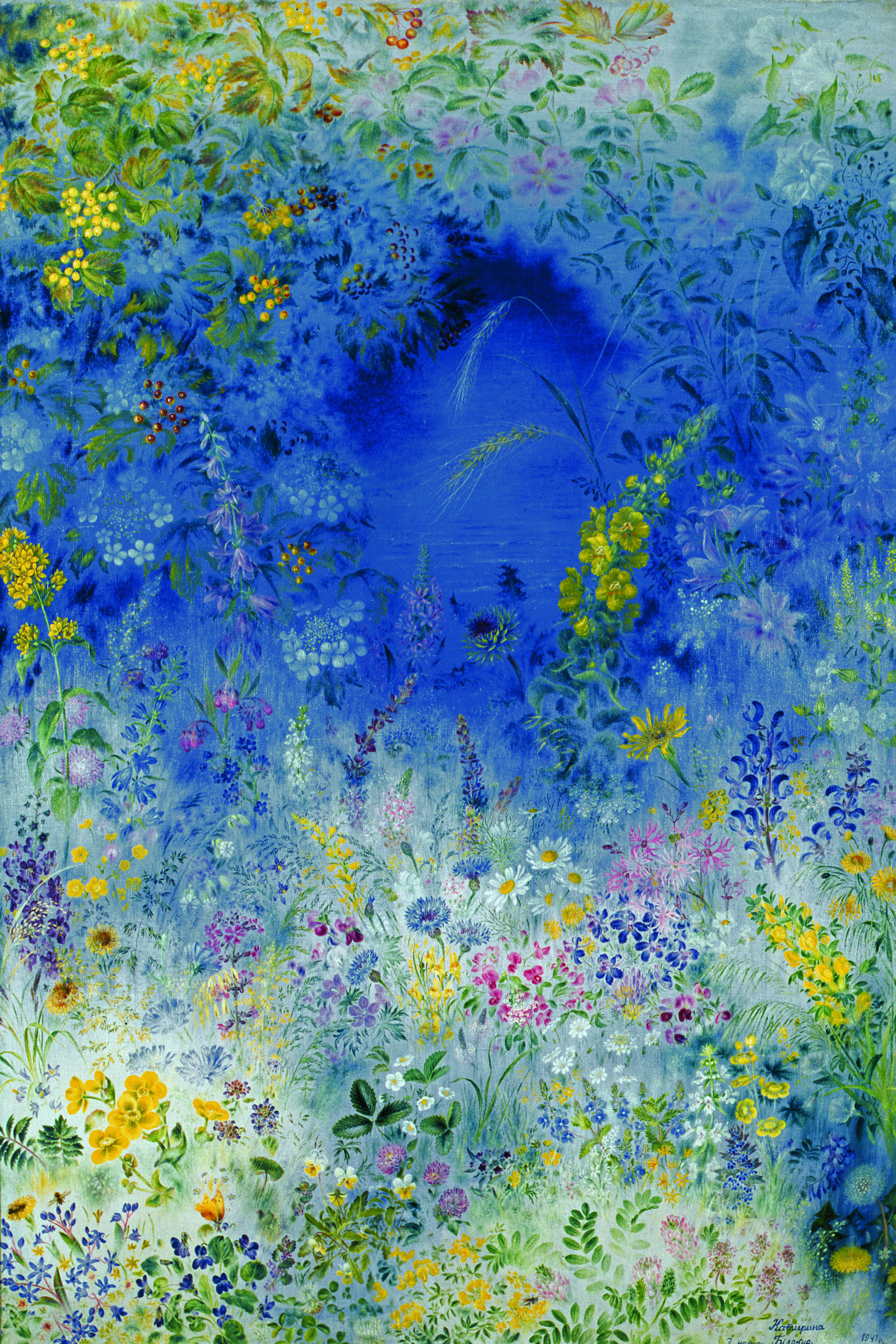
The most famous artistic center is the village of Petrykivka in the Dnipro region and its decorative paintings. Originating on Cossack land, in a free environment, this artistic phenomenon is rooted in deep folk traditions.
Collective in nature, Petrykivka painting developed over the centuries on the basis of bright artistic personalities. The masters of different generations of this art center created a unique layer of Ukrainian culture, recognized worldwide as a phenomenon of national artistic thinking. The works of the Honored Masters of Folk Art of Ukraine Tetiana Pata (1884-1976) and Nadiia Bilokin (1994-1981), Yaryna Pylypenko (1983-1979) are included in the golden fund of folk art of Ukraine.
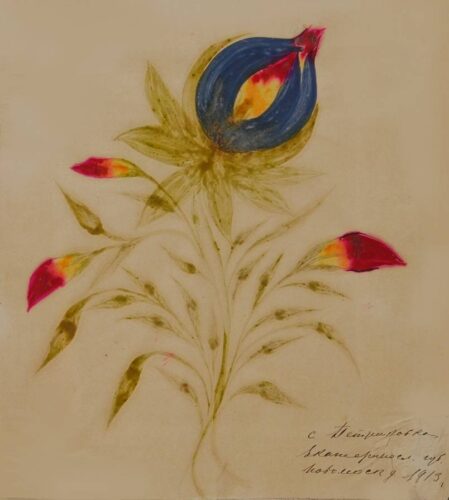
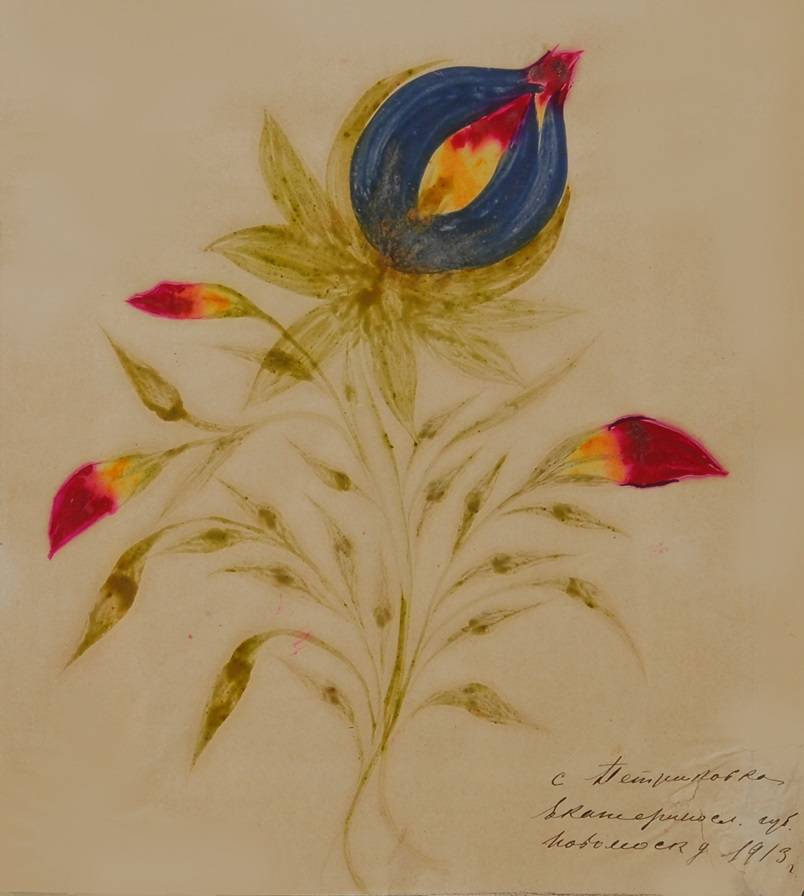
The museum’s collection of Petrykivka paintings covers the period from 1913 to 2022 and includes about 2000 works that allow us to trace the evolution of the development of the creative style of both each individual master and the whole artistic movement, from the coryphaei who began their career by creating wall paintings and “malovky” to the compositions of young masters who came to art in the late twentieth and early twenty-first centuries.
An invaluable contribution to the development of Petrykivka ornamental art was made by the masters who connected their creative life with Kyiv, launching a new, original direction of decorating porcelain products in Ukraine. Their creative pursuits had a significant impact on the development of Petrykivka painting in the second half of the twentieth century.
The museum houses unique collections of works by the Kyiv group of Petrykivka artists: People’s Artist of Ukraine Marfa Tymchenko (1922-2009), Vira Klymenko-Zhukova (1921-1965), Honored Masters of Folk Art of Ukraine Vira Pavlenko (1912-1991) and Hanna Pavlenko-Chernychenko (1919-2008), who from the early 1940s to the end of the twentieth century worked on creating ornamental compositions not only on paper and cardboard, but also on porcelain.
From 1958 to 2001, the Druzhba factory (since 1989 – Petrykivka Painting) operated in Petrykivka, producing papier-mâché and wood souvenirs. Having gained an industrial basis, decorative paintings on souvenirs brought great popularity to Petrykivka in the 1960s and 1980s. Honored masters of folk art of Ukraine spent many years working at the factory: Fedir Panko (1924-2007), Vasyl Sokolenko (1922-2018), Volodymyr Hlushchenko (born in 1939), People’s Artist of Ukraine Hanna Samarska (born in 1942), and others.
Numerous ornamental compositions of both individual masters and entire dynasties that continue to work in Petrykivka are represented in the artwork: Andrii Pikush (b. 1950) and Mariia Pikush (b. 1954), sisters Valentyna Deka (b. 1957), Lidiia Bulavyn (b. 1957), Mariia Yanenko (b. 1962), and Nataliia Statyva-Zharko (b. 1970), Nataliia Rybak (b. 1958). ), Valentyna Panko (b. 1960) and others, the inherent Ukrainian national character of the desire for festivity, poetry, and an exquisite palette of colorful floral ornaments was vividly realized.
Today, many Petrykivka masters work at the Petrykivka Folk Art Center.
In 2013, UNESCO inscribed the Petrykivka painting on the Representative List of the Intangible Cultural Heritage of Humanity. Petrykivka became the first representative from Ukraine to receive such a high international status and worldwide recognition.
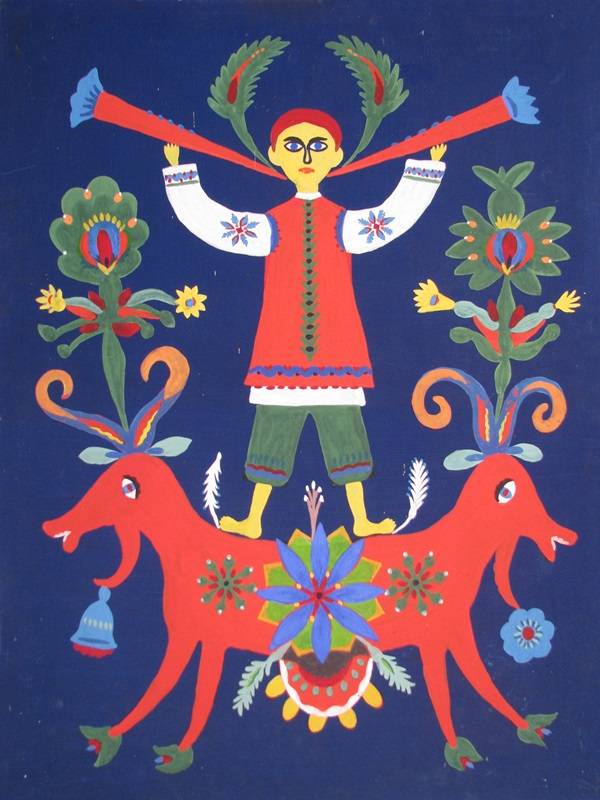
In the 1960s, many talented folk artists appeared in Ukrainian decorative painting, whose creative style was marked by a bright personality and deep knowledge of the folk traditions of their native land. Referring to Ukrainian folklore, poetry and literature, the glorious past of our nation, they combined canonicity and variability, tradition and individuality, the infinity of themes and festive images in their compositions.
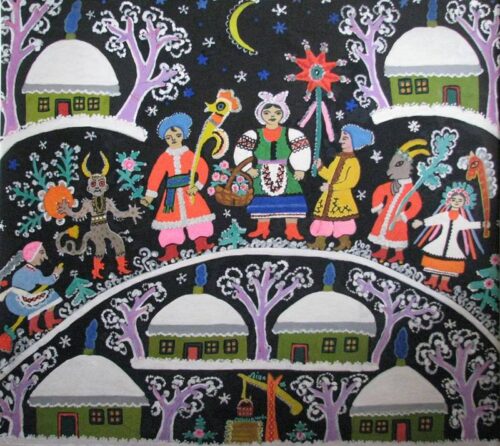
Among them: Ivan Skitsiuk (1907-2004) with the traditions of Podillia decorative painting, Makar Mukha (1906-1990), sisters Iryna Homeniuk (1913-1989) and Sofia Homeniuk-Melnyk (1921-2001) with the traditions of ornamental art of Cherkasy region. The works of Yelyzaveta Myronova (1929-2010) and Mariia Buriak (1935-2008) from Kyiv region are inspired by folk songs and rituals, dedicated to Cossack themes and calendar holidays. Zhytomyr region is represented by works by Maria Naumchuk (1900-1991), Ivano-Frankivsk region by floral compositions by Paraska Khoma (1933-2016) and Stefania Sandiuk (1944-2008).
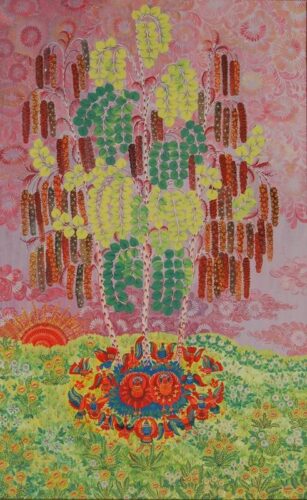
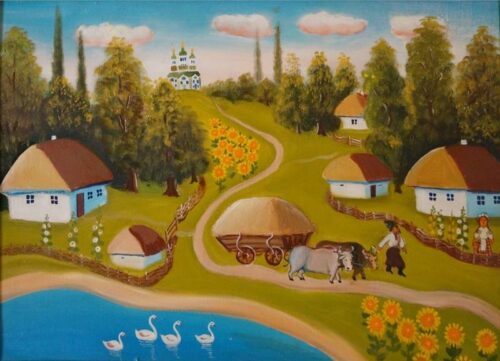
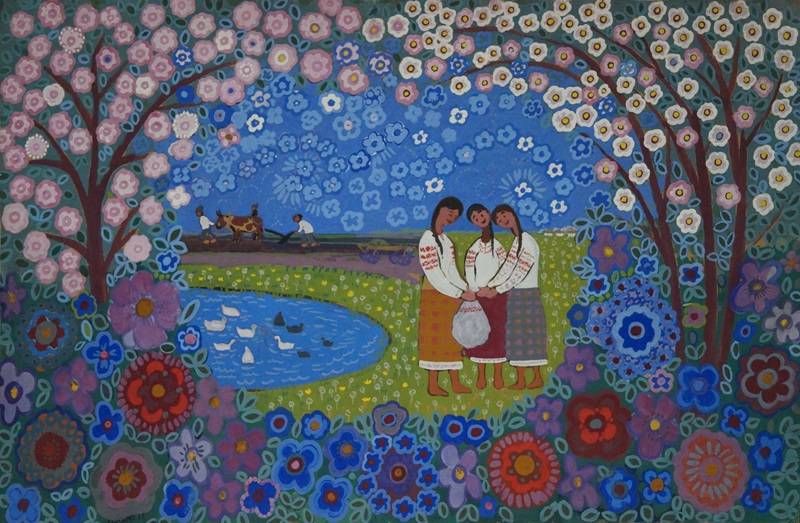
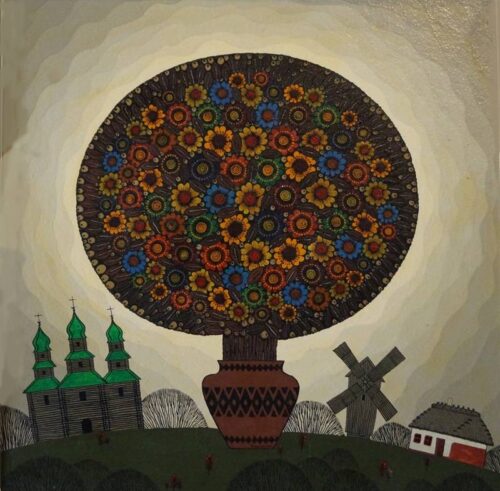
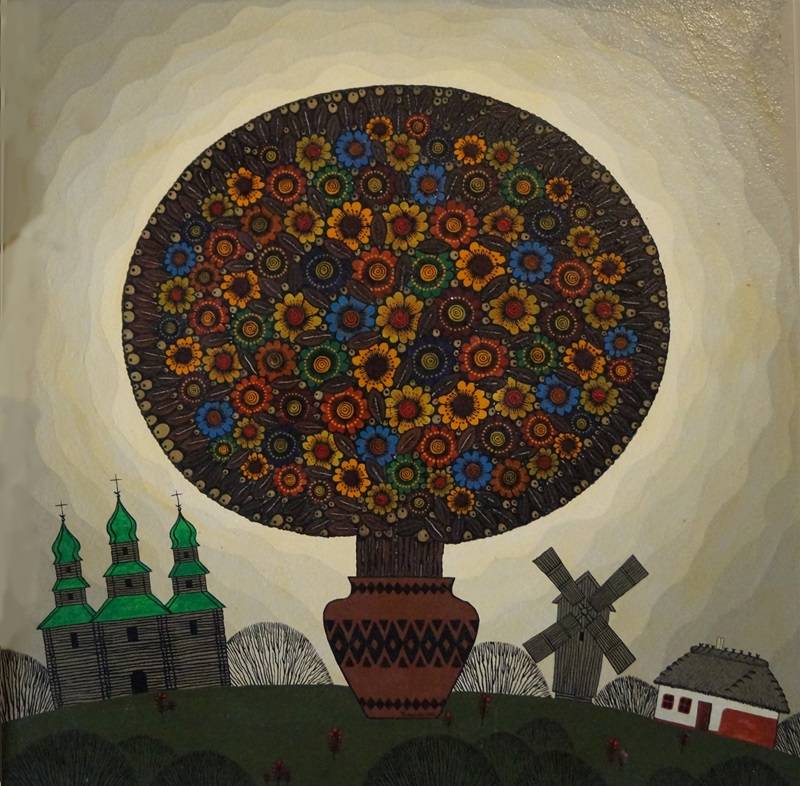
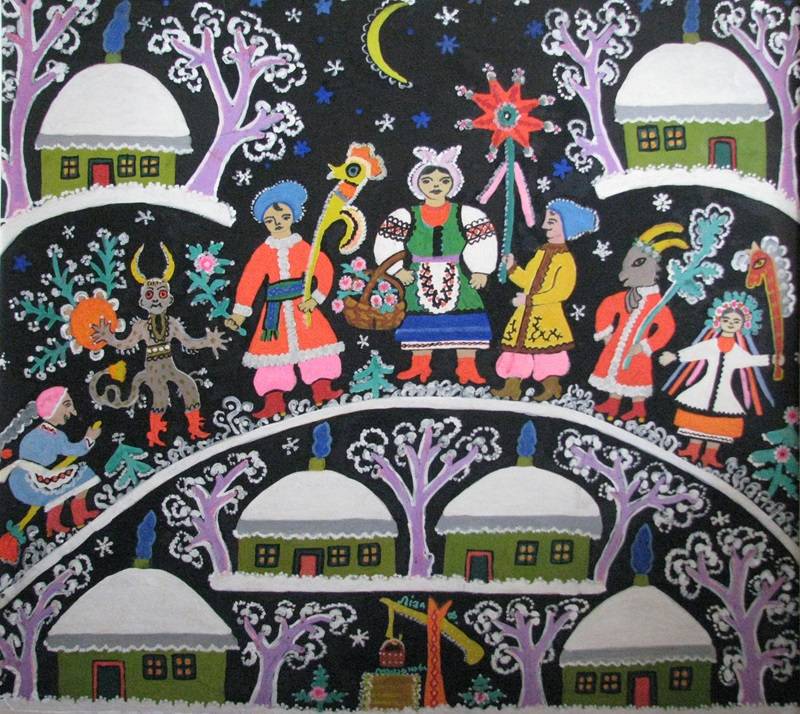
A separate group consists of works made in the naïve style using oil painting and folk art on glass. The collection began to be formed in the second half of the twentieth century and includes works from the late nineteenth century to the twentieth century by both unknown authors and well-known Ukrainian artists who did not receive an academic education but sought creative self-realization, as well as professional artists working in the style of decorative and applied arts.
Mykhailo Onatsko (b. 1941) from Poltava region finds images and subjects for his works in the everyday life, holidays and songs of his people. Endowed with a natural vision of beauty, Ivan Tsiupka (1926-2007) wrote a chronicle of his native Sumy region. His work was also inspired by Ukrainian folk songs, which is why the musical tone is inherent in many of his works.
The work of the professional artist Maryna Semesiuk (1958-2014) was nourished by inexhaustible sources of folk traditions. Her compositions combine canonicity and variability, tradition and individuality. Finding the great and significant in simple things, her fantasy landscapes acquire a symbolic and allegorical sound.
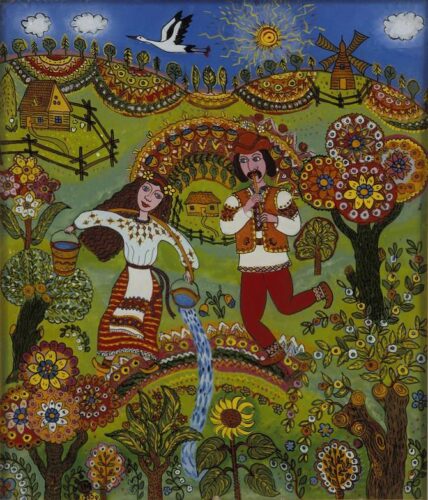
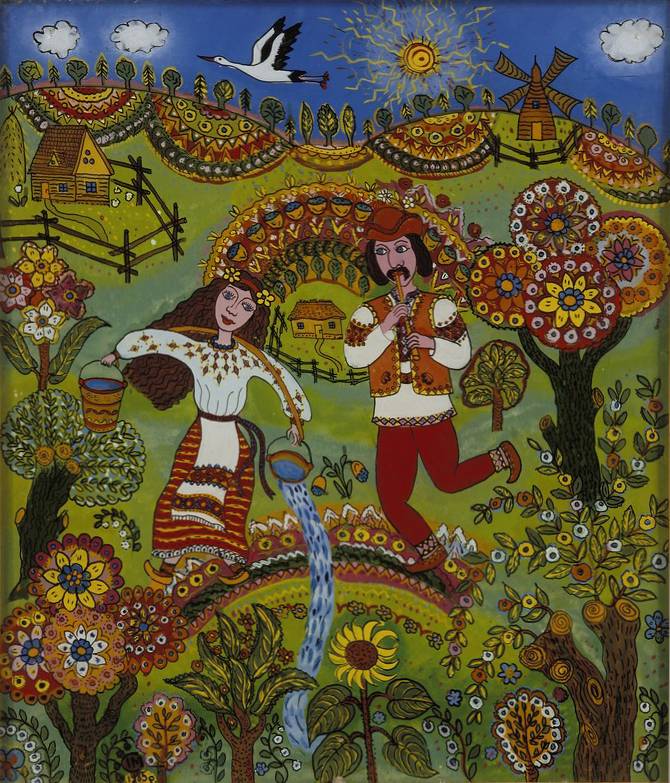
The folk painting on glass in the museum’s collection is represented by works by Anastasiia Rak (1922-2014) from Poltava region, Ivan Skolozdra (1934-2008) from Lviv region, and many other masters.
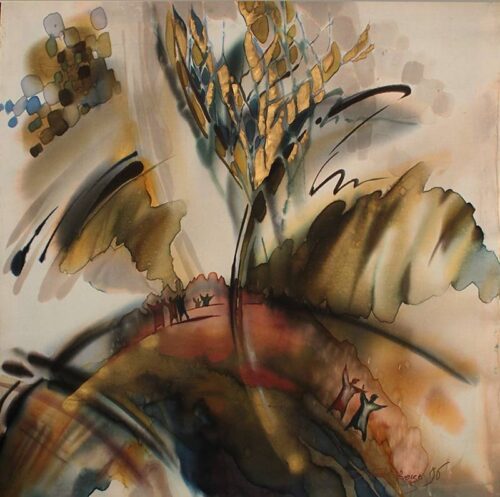
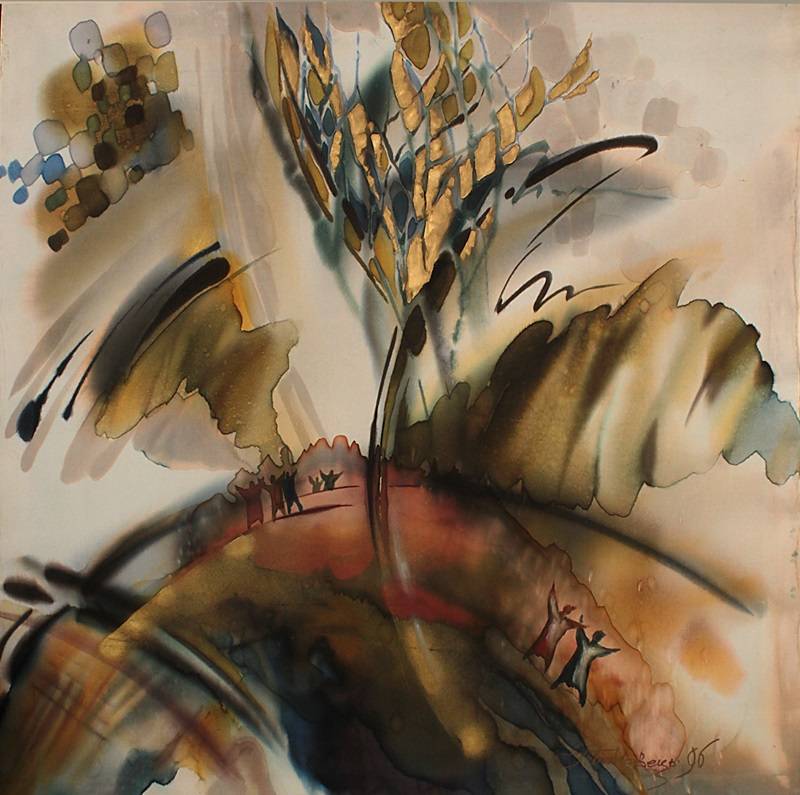
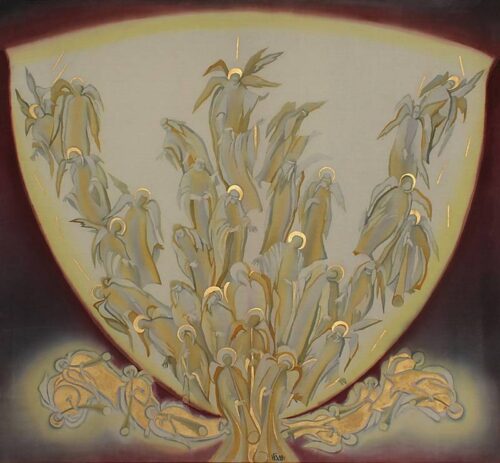
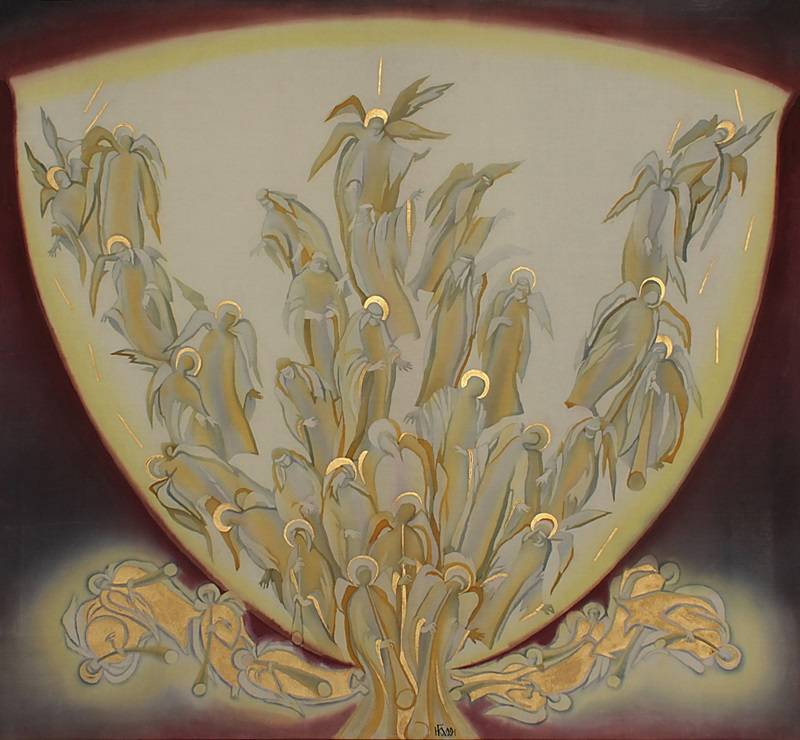
In the first half of the 1950s, the museum’s collection of batiks by Kyiv artists began to form: Vira Lymarenko (1904-1978), Oleksandr Pashchenko (1911-1991), and Marfa Tymchenko (1922-2009).
In the 1980s and 1990s, the collection was replenished with works by Kyiv artists Nadiia Hryban (1927-2018), Tamara Moroz (1929-2003), Nataliia Kyianytsia (born 1953), Tetiana Myskovets (1957-2012), Iryna Tarnavska (born 1953), and others. These are compositions with a pronounced style, mastery of the batik technique and a special sense of color.
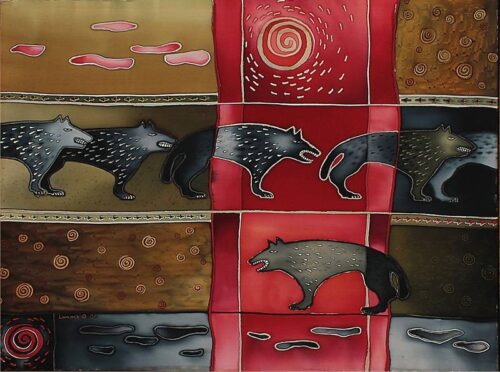
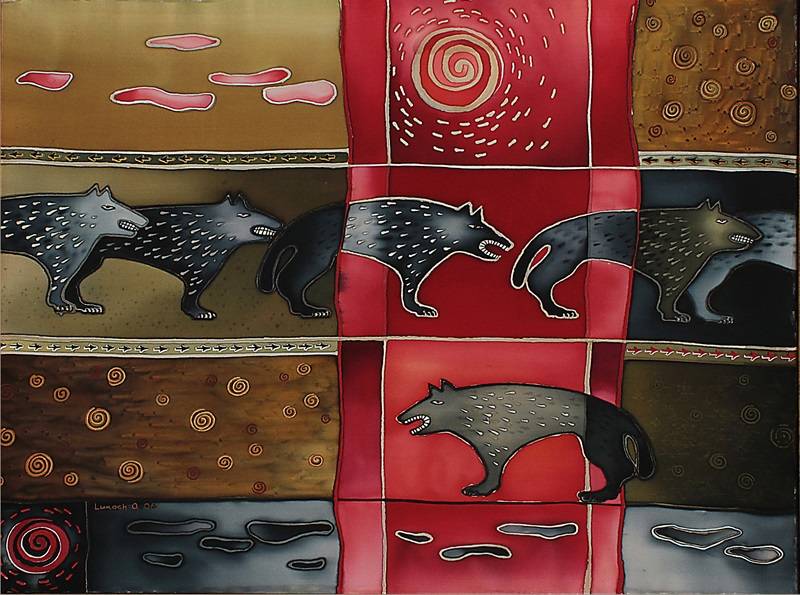
The works are filled with romance, poetry, allegorical and fantasy images by the masters who came to the art of batik at the turn of the twentieth and twenty-first centuries. In addition to the traditional batik technique, Natalia Hronska (born in 1953 in Kyiv), Larysa Lukash (born in 1955 in Poltava region), Olha Lukach (born in 1964 in Uzhhorod) and other artists significantly expand the pictorial possibilities of batik and create deeply philosophical and meaningful works.
Selected works