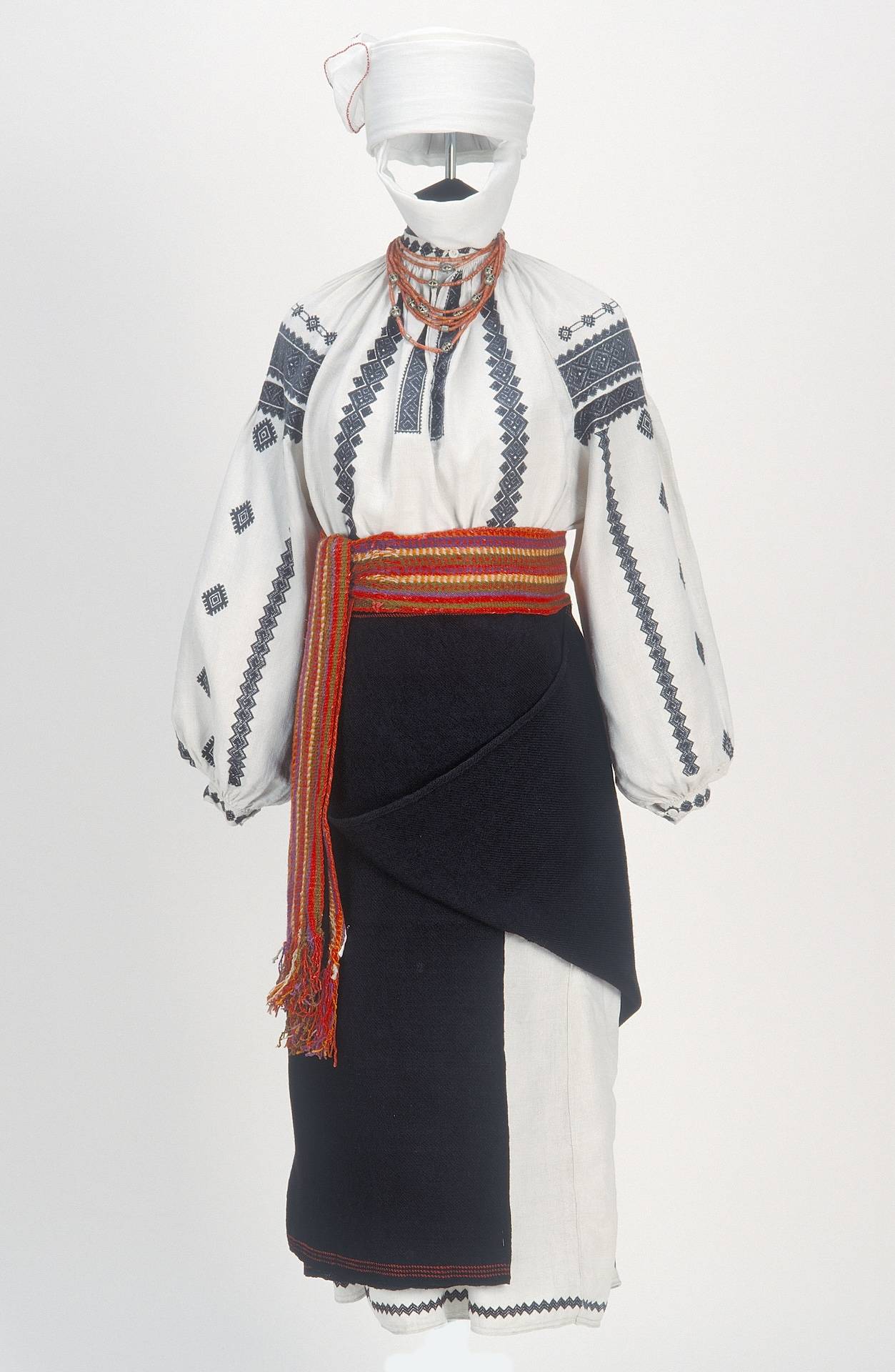
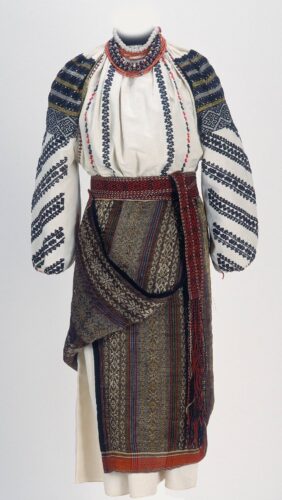
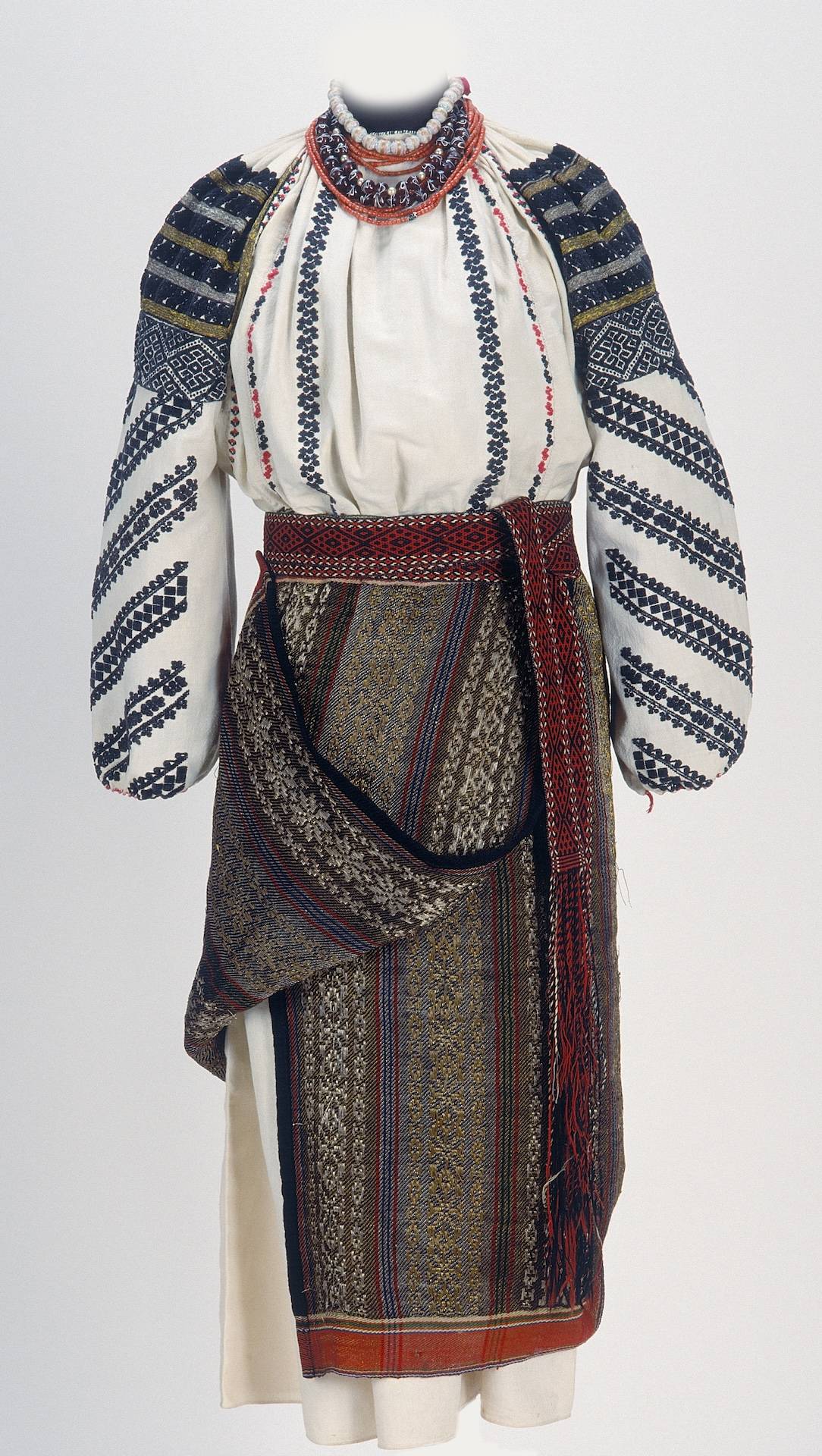
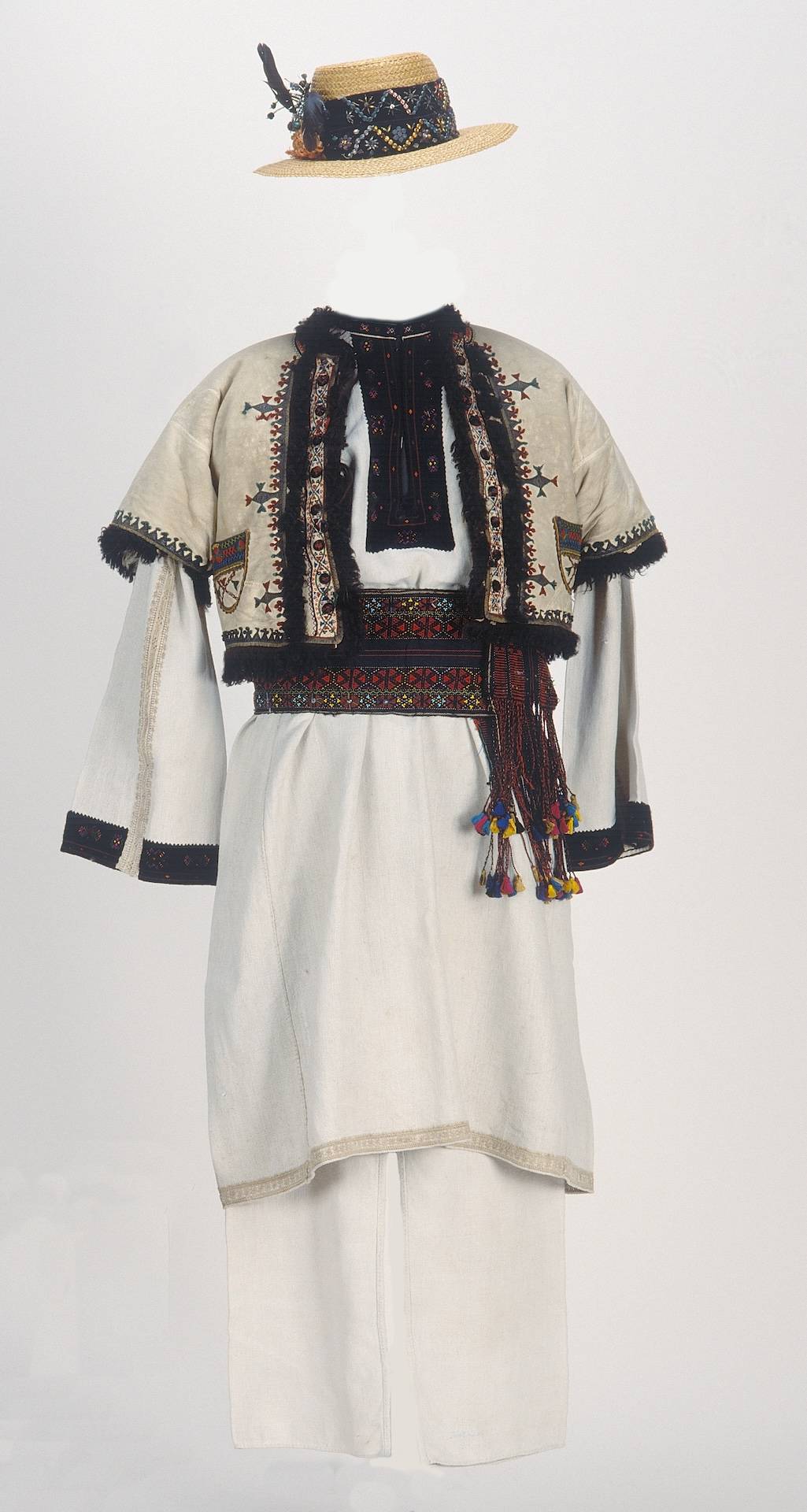
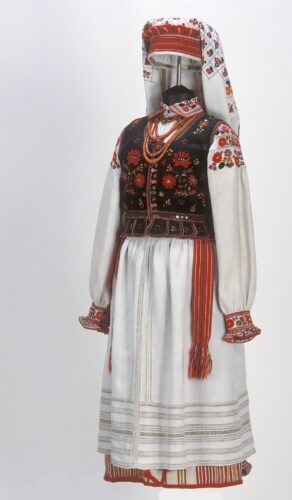
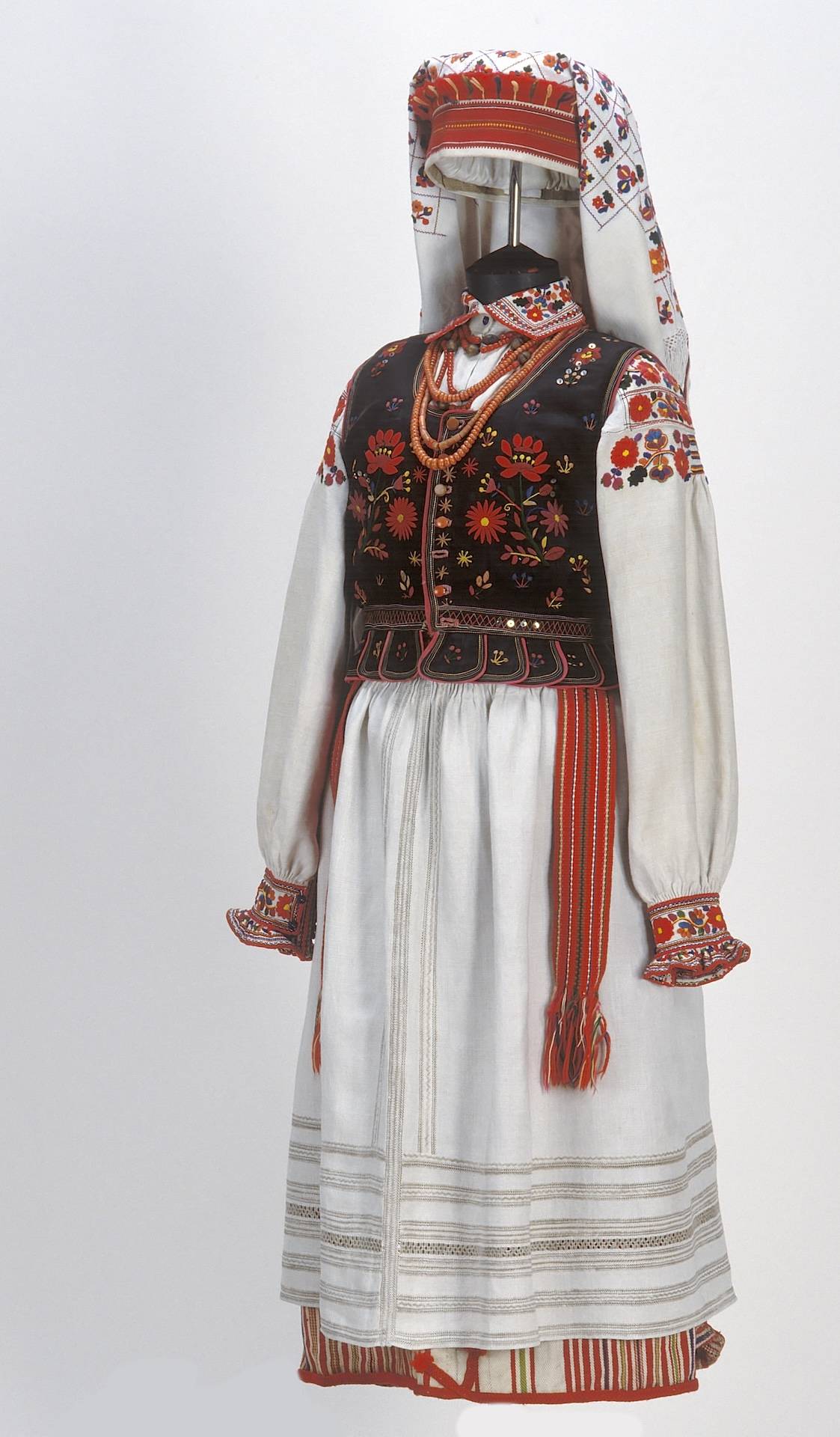
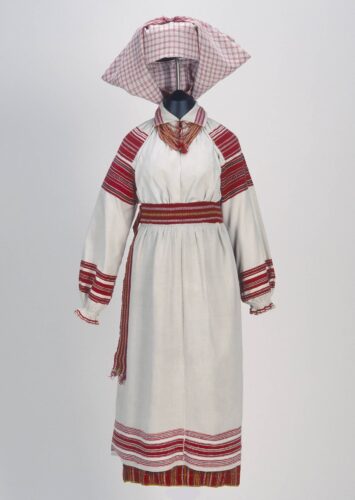
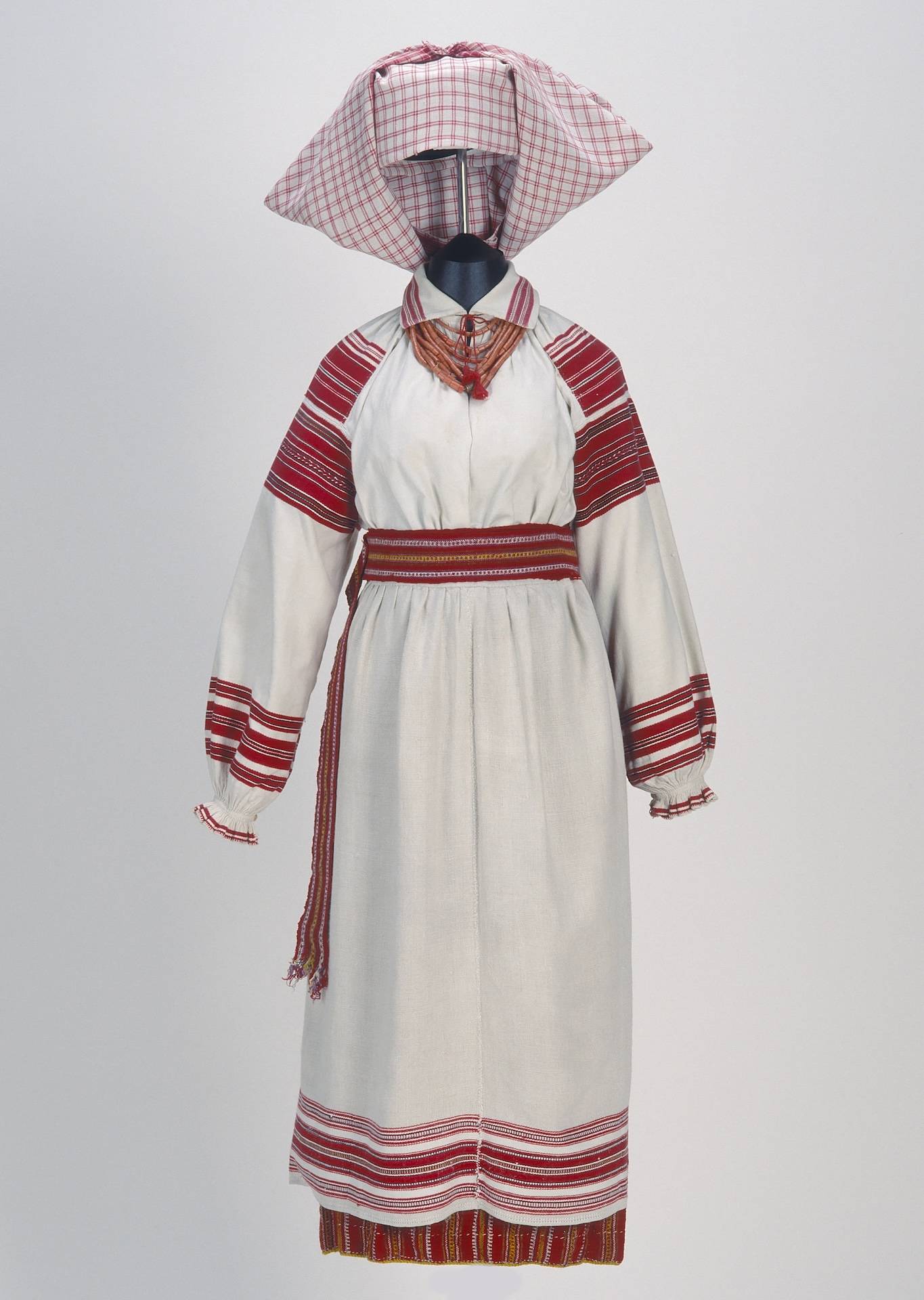
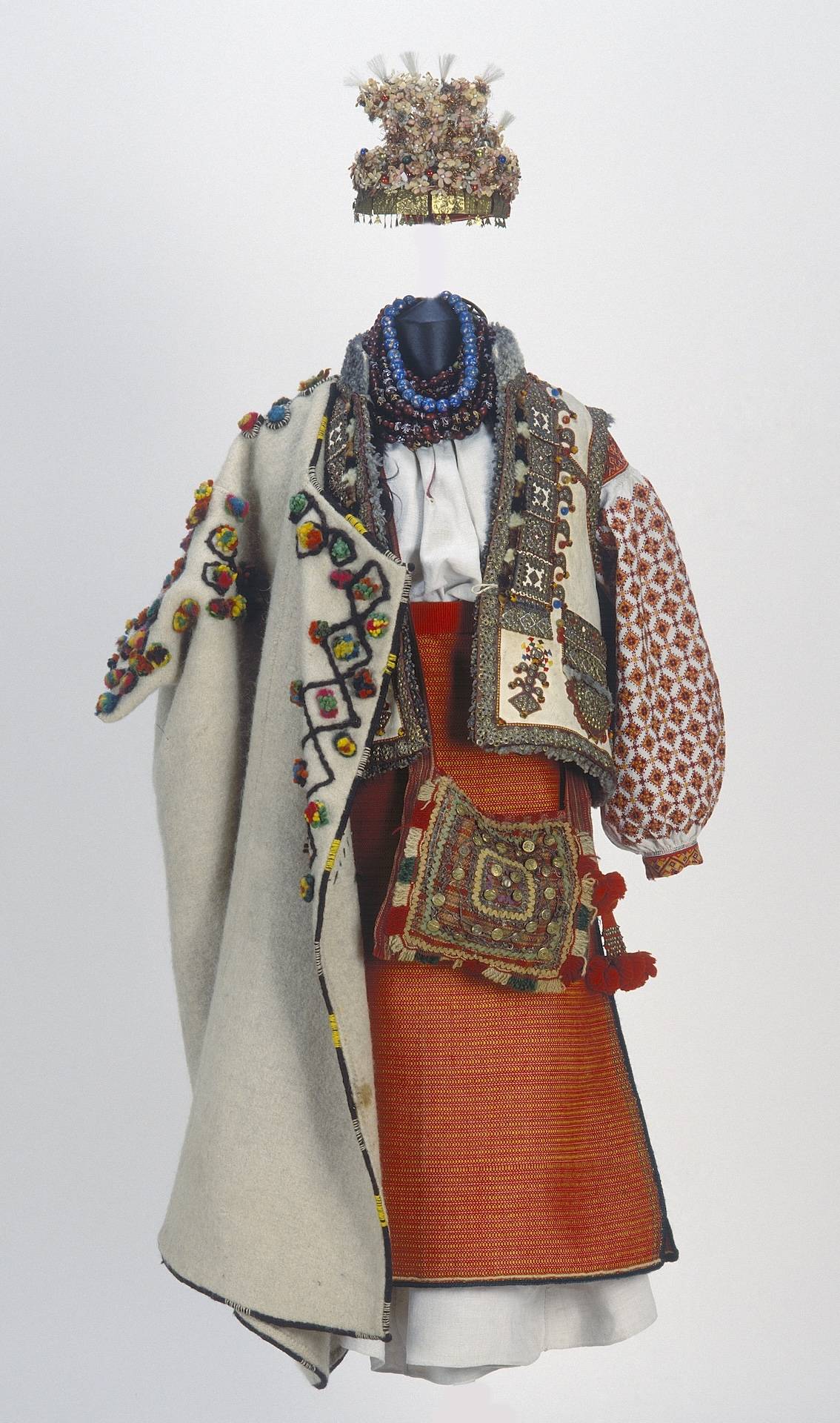
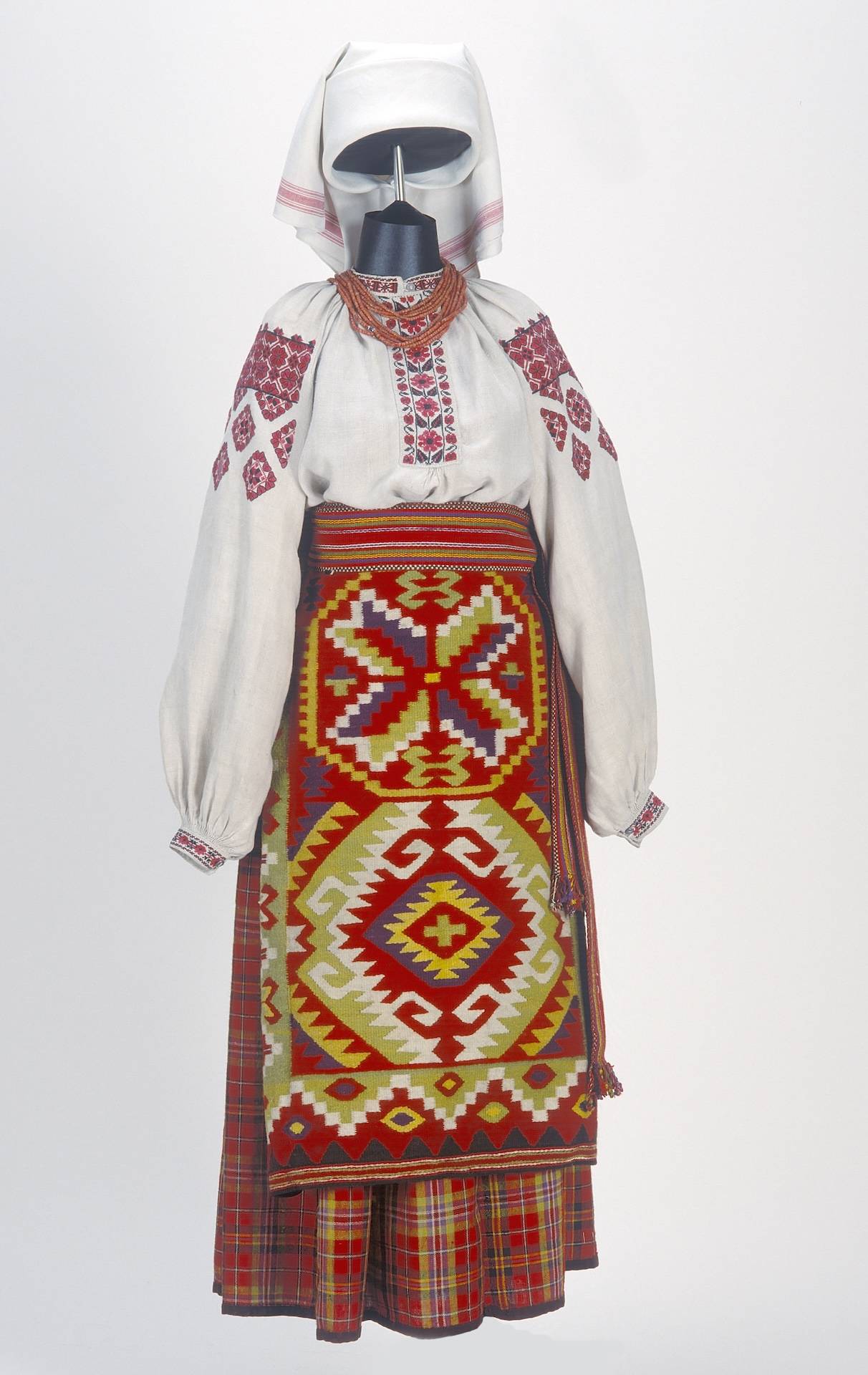
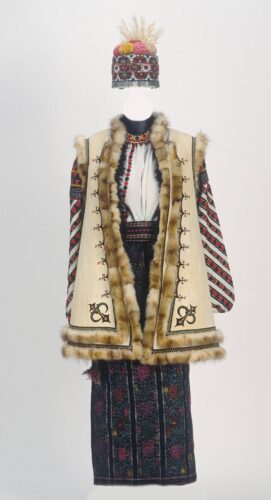
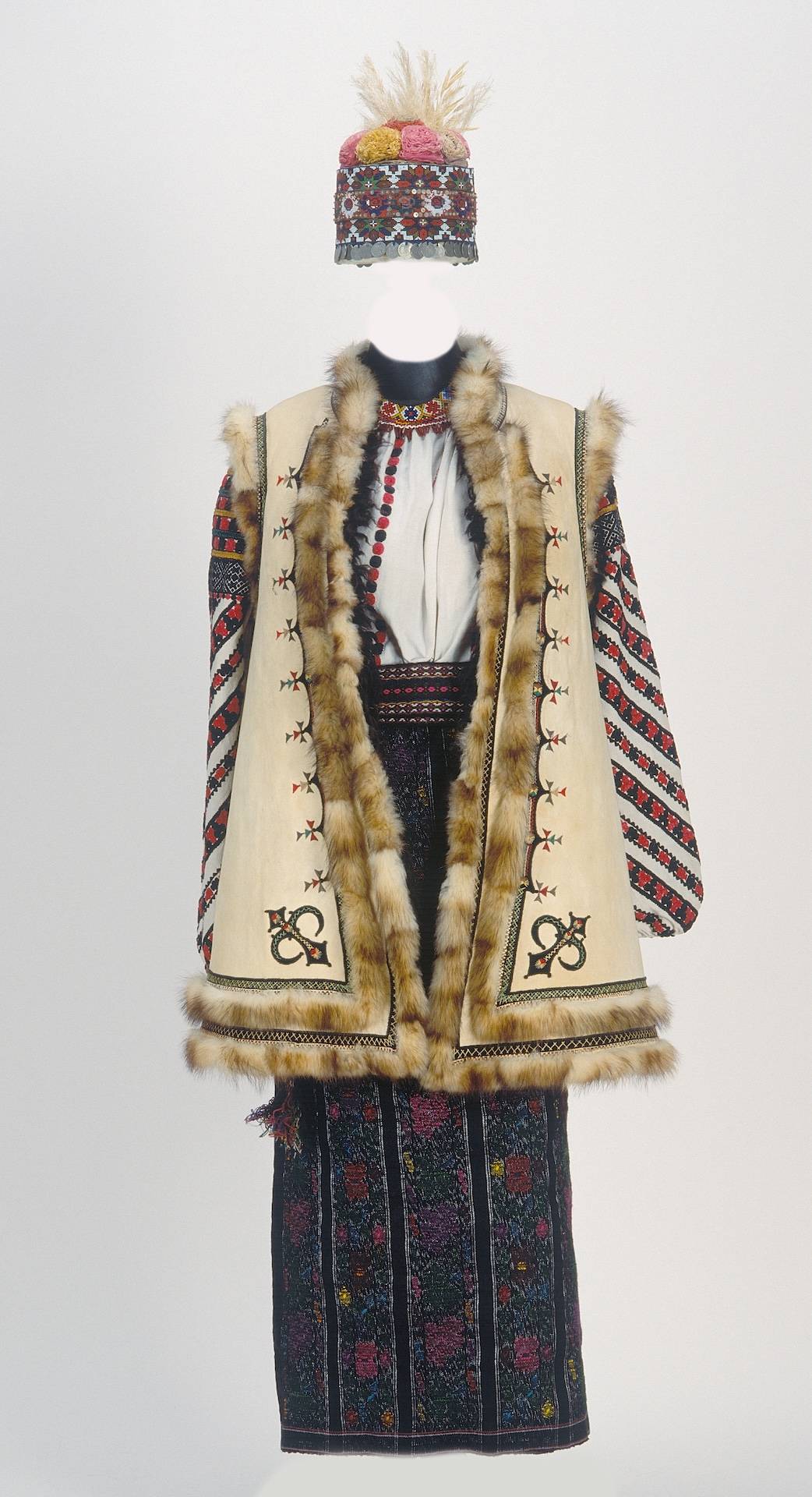
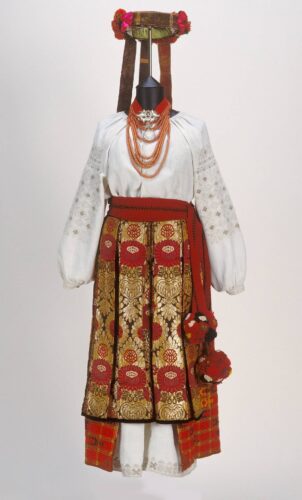
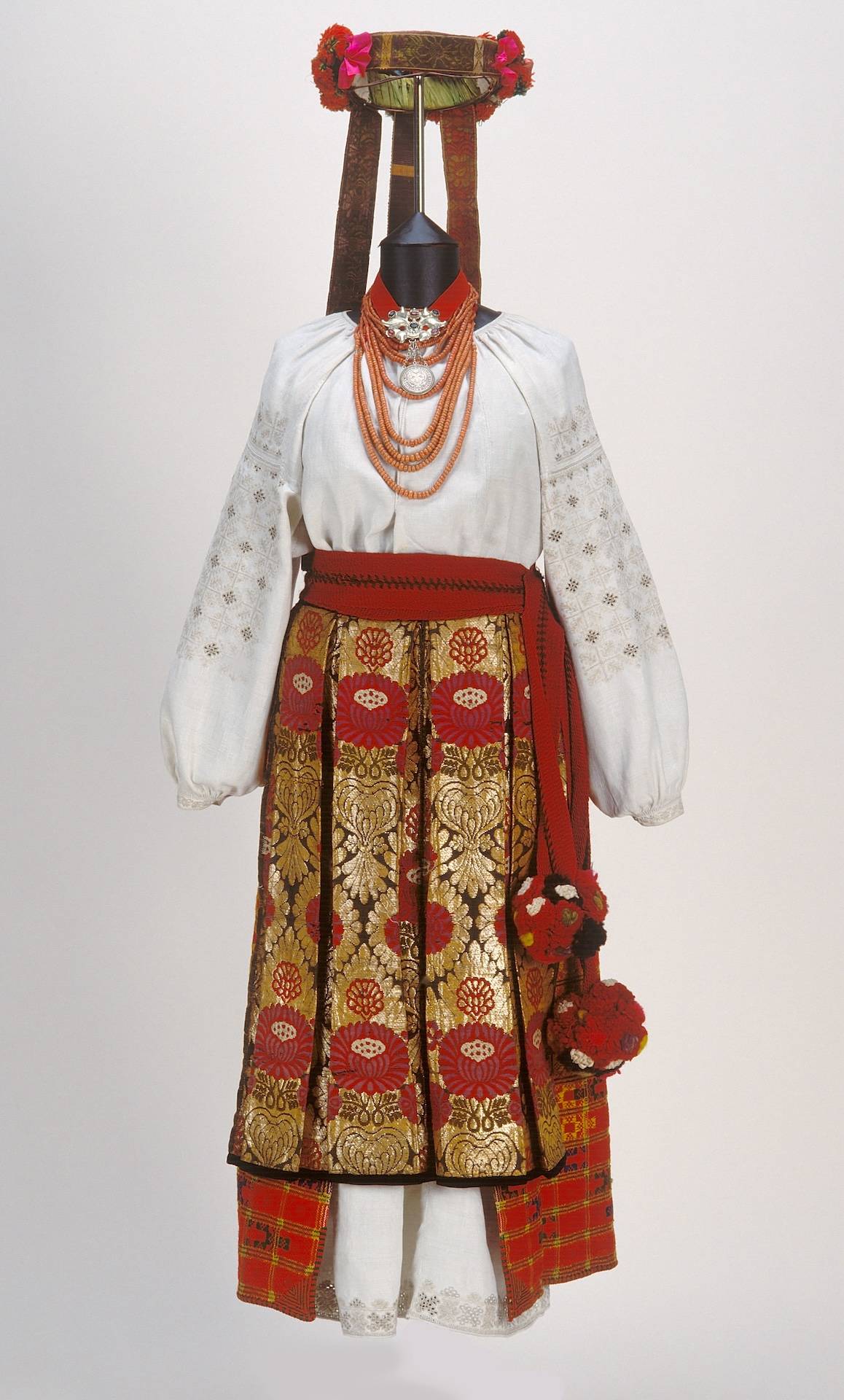
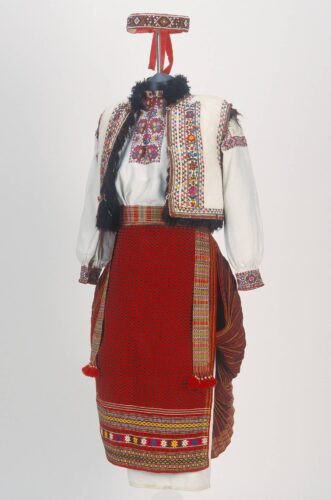
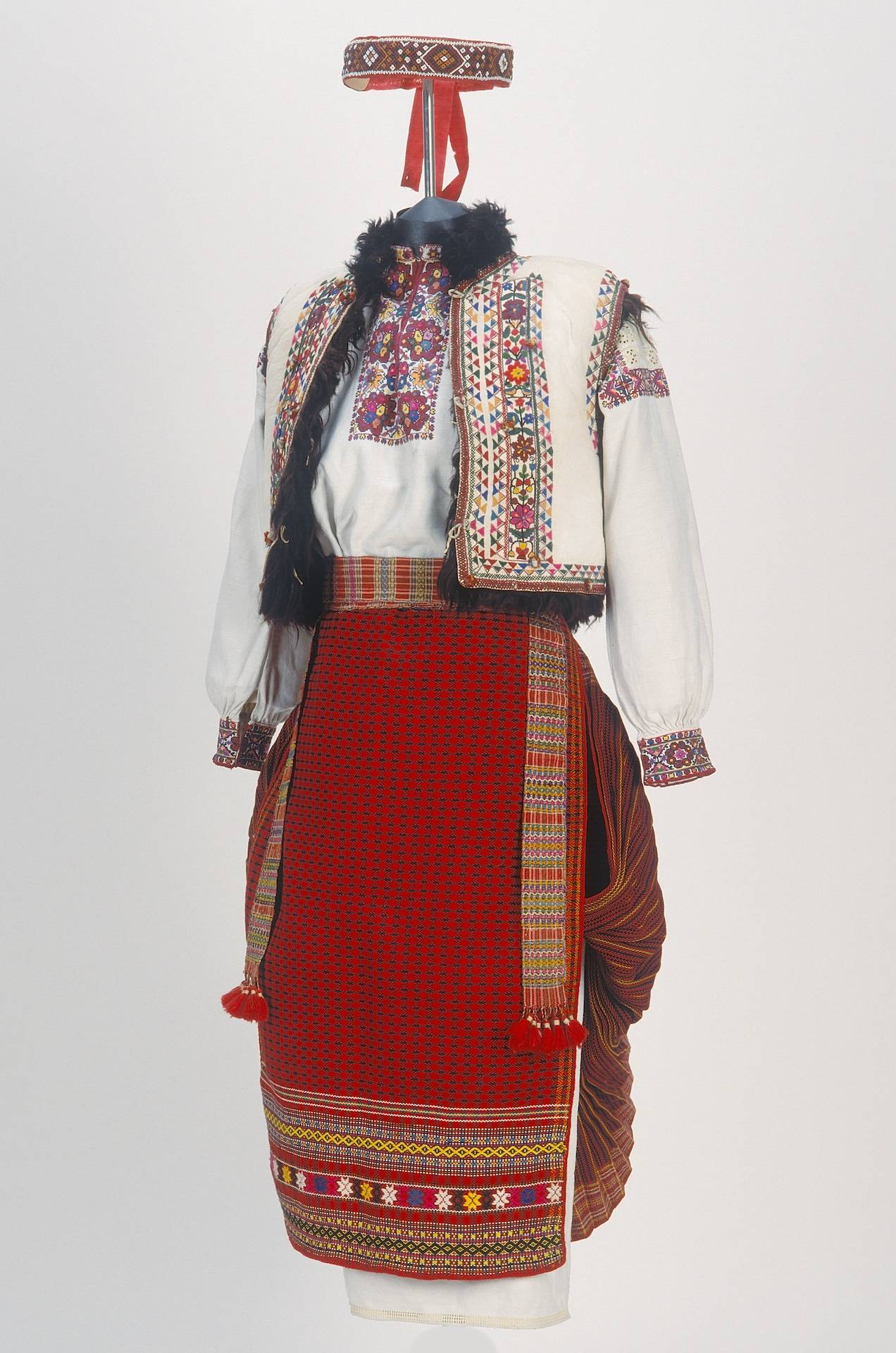
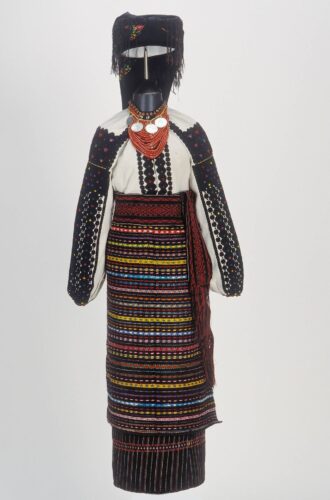
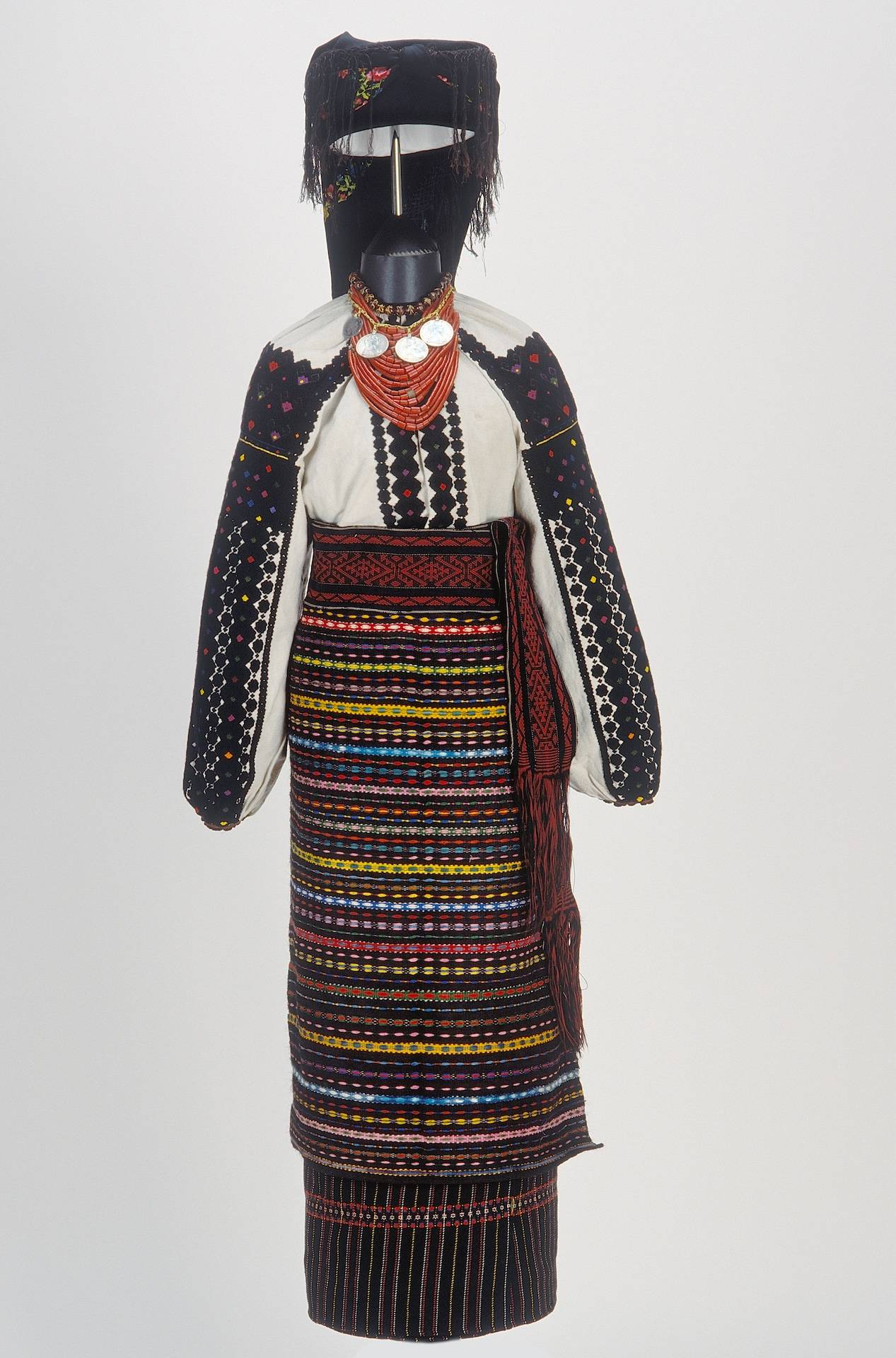
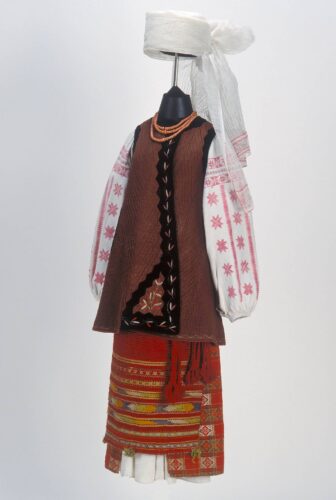
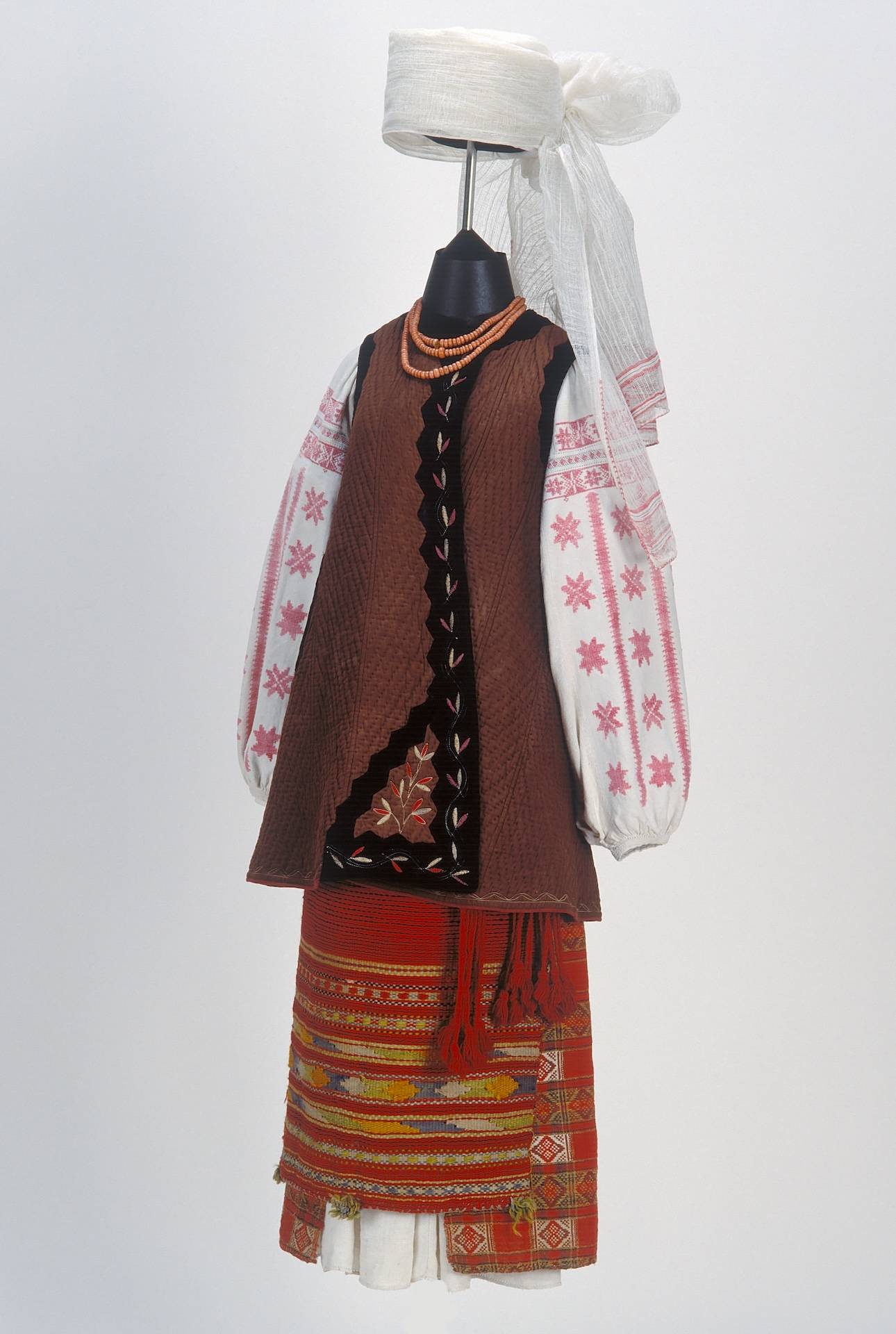
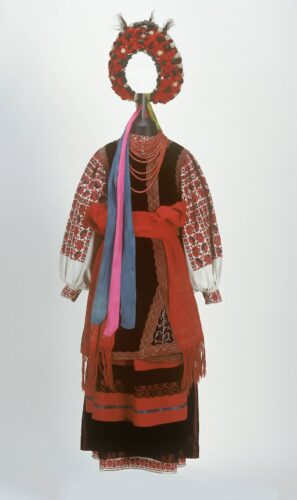
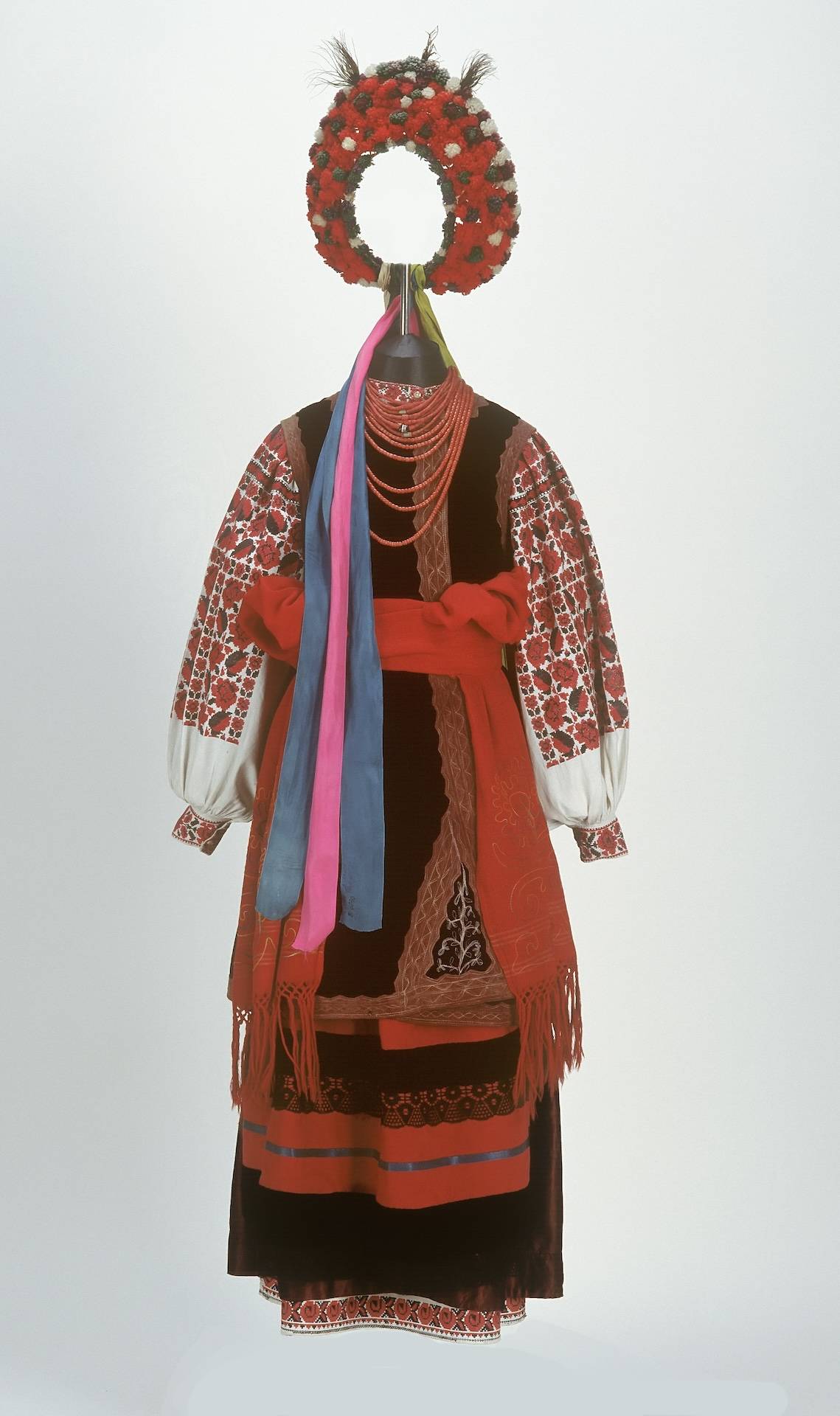
The chemise is the major and most ancient part of the attire. Since time immemorial it was granted with the peculiar magical qualities because it was put directly on the human body. The hempen and flax linen was used as a fabric. The white color was a typical feature of the Ukrainian chemise. It was decorated with embroidery especially the sleeves that are wide, long and assembled at the wrists. For the decorative purposes the artists used nearly one hundred different seams.
The plakhta (a skirt consisted of two parts-aprons) was added to the chemise. It was a typical part of Ukrainian woman waist costume that included one or two cloths of homespun wool fabric with squared design. In the Polissya region the girls and young married women wore both plakhtas and homespun wool skirts. In the Volyn region – red with lengthwise strips richly pleated skirts and felt boots. In the Zhytomyr and Chernigiv regions one-color bright red skirts made of smooth-woven wool cloths. The “Shorz” skirt was very popular in the Lviv region. It was decorated with the tuck and ornament that was grounded on the rhythmical changes of the vertical multi-colored strips.
Gradually the homespun wool zapaska (skirt), obhortka (a skirt made of linen that was wrapped up around the woman’s waist) and plakhta were replaced with aprons and skirts that were sown from different sorts of fabric – taffeta, velveteen, brocade, sateen, calico, etc. This type of garment required additional decoration. It was pursed, pleated, edged with colorful ferret, velvet ribbon and lace. The men’s wear was manufactured from the factory-made textile.
The women put zapaska over the plakhta. Kersetka (a sleeveless woman’s overcoat) was usually put on the shoulders. In the Lviv region women wore kamizelka (waste coat) that was manufactured of the black factory-made textile.
The headwear was an important component of the costume. The married women wore colorful “ochipky” or bonnets decorated with “namitka” (a shawl tied around the bonnet). Girls used wreaths with the bands.
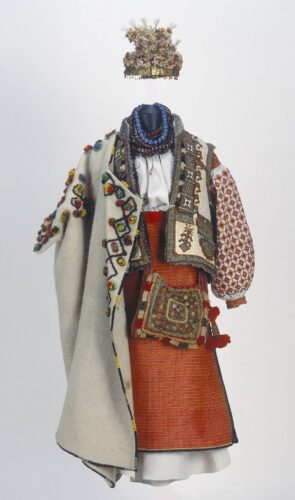
The wear set was complemented with the pectorals or adornments. The coral necklace was very fashionable in Ukraine for hundreds of years and is considered to be a national adornment. The people used to call it as a “good necklace”. It was complemented with dukach and zgarda. The dukach is a necklace handmade of silver coins from Austrian and Russian origin. Zgarda is a necklace handmade of small copper crosses. In all Ukrainian regions women liked to wear gerdan (necklace handmade of glass beads) and sylianka (necklace handmade of beads in the shape of collar). In the Western Ukraine it was very modish to wear glass and Venetian necklace.
Men’s and women’s outer garments had no significant differences. It can be divided only as autumn and winter overclothes. The “svyta” (peasant’s overcoat) with “moustaches” (sidelong gussets) were very popular in the central part of Ukraine. It was sawn of expensive felt material with white or black color. Kereya, the men’s overcoat made of high quality broadcloth was very popular on the territory spread from the left bank of Dnieper to the eastern boarders of Ukraine. In winter women and men wore “kozhukhy” sheepskin coats. The holiday kozhukh was famous for the beauty of decorative elements and quality of tannage.
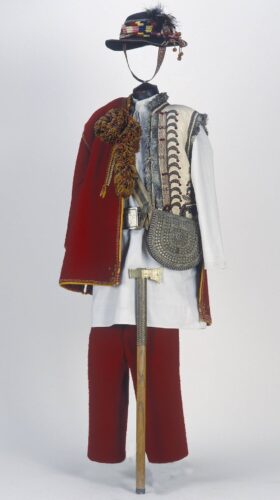
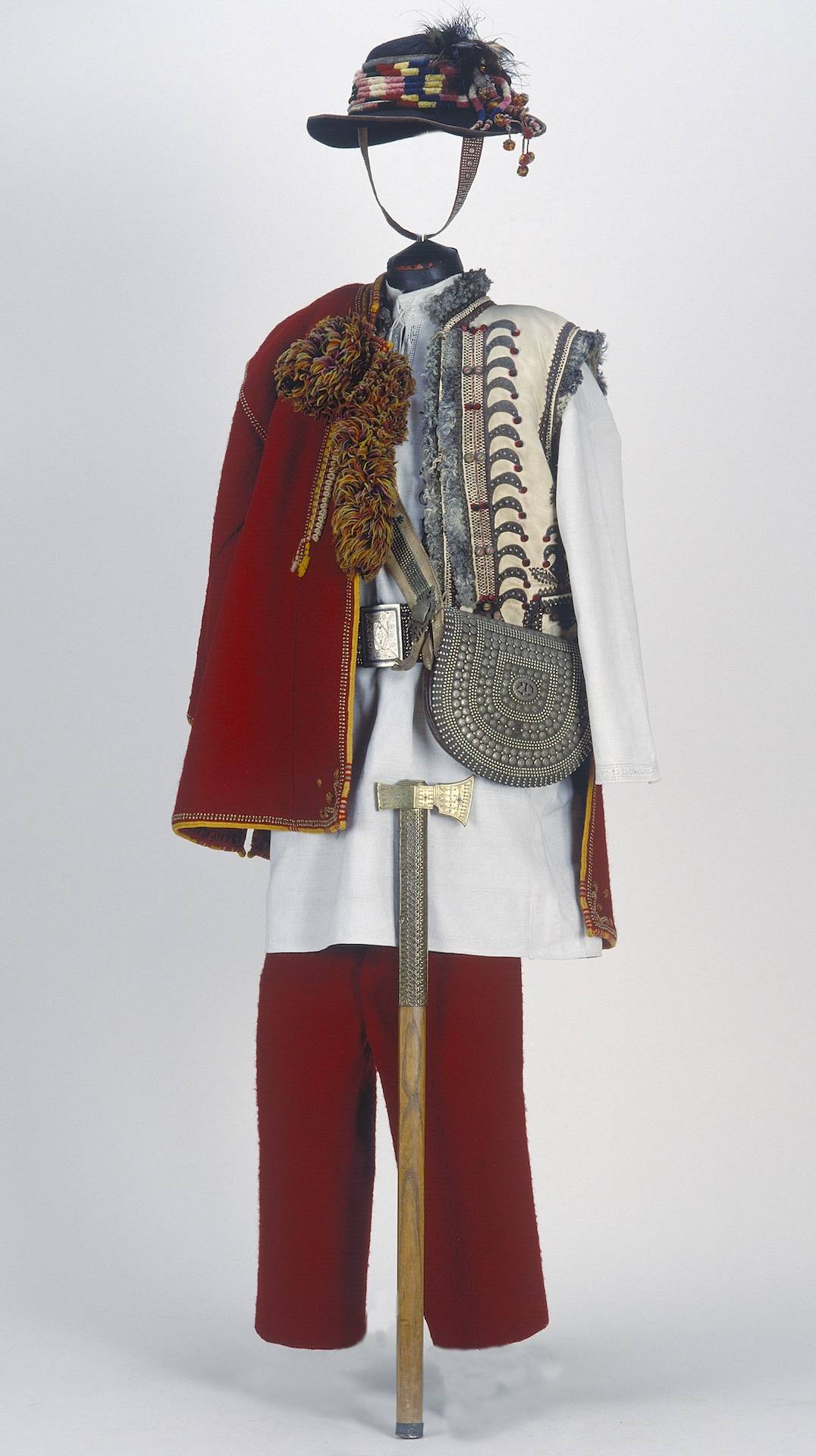
The museum is proud of excellent collection of the cloth garments from Western Ukraine. It encompasses famous Hutsul serdak (warm cloth dress) that is richly decorated with the multicolored embroidery and keptar (short sleeveless fur coat).
The belts, wool and leather bags, purses, pouches, topirtsi (hatchets) and walking stick with the casted top in the shape of the horse, ram or grass snake head.